
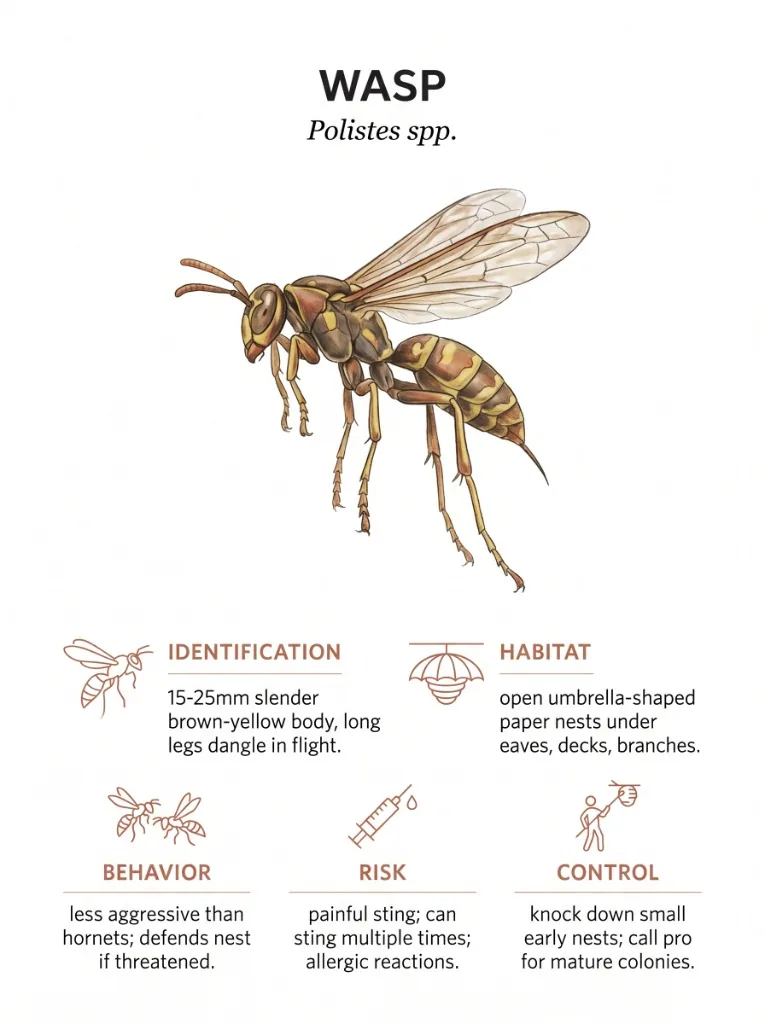
Paper Wasp (Polistes spp.) identification infographic showing size, habitat, behavior, risk, and control
High concern

Paper Wasp — Identification & Nest Removal

Polistes spp.

Size
15–25 mm
Category
Stinging Insects

About the paper wasp

Paper wasps (Polistes spp.) are the most commonly encountered wasp on Triangle homes — the slender, long-legged wasps you see building small umbrella-shaped nests under eaves, deck railings, playhouse ceilings, mailboxes, and grill covers all summer. Adults are 15-25 mm, brown to reddish-brown with yellow markings, and their legs dangle noticeably during flight — an easy way to tell them apart from bees and yellow jackets.

Compared to yellow jackets, paper wasps are less aggressive: they generally sting only when the nest is directly touched or threatened. That said, a nest above a doorway, above a deck seating area, or near where children play is a real problem, and stings hurt significantly. Professional removal is safer than DIY when the nest is in a high-traffic zone or hard to reach.

Quick ID

15–25 mm slender brown-yellow body; long legs dangle in flight.

In the Triangle

Common across Triangle porches, decks, and patios all summer; check under eaves before grilling season.

Think you have paper wasps?

Free inspection from a licensed Castle Exterminators technician — Durham, Chapel Hill, Raleigh, Cary & the Triangle. We'll confirm the species and recommend a treatment plan.

Request Free Inspection (919) 606-8686
Identifying Paper Wasps

  • Body — slender, elongated, 15-25 mm; brown to reddish-brown with yellow bands.
  • Legs — long and dangling below the body in flight (this is the fastest field ID).
  • Wings — held folded lengthwise along the body at rest.
  • Nests — open umbrella-shaped combs of visible hexagonal cells, attached by a single stalk to eaves, ceilings, deck undersides, mailboxes, or exposed protected surfaces.
  • Nest size — most Triangle paper wasp nests hold 10-50 individuals; occasionally more.

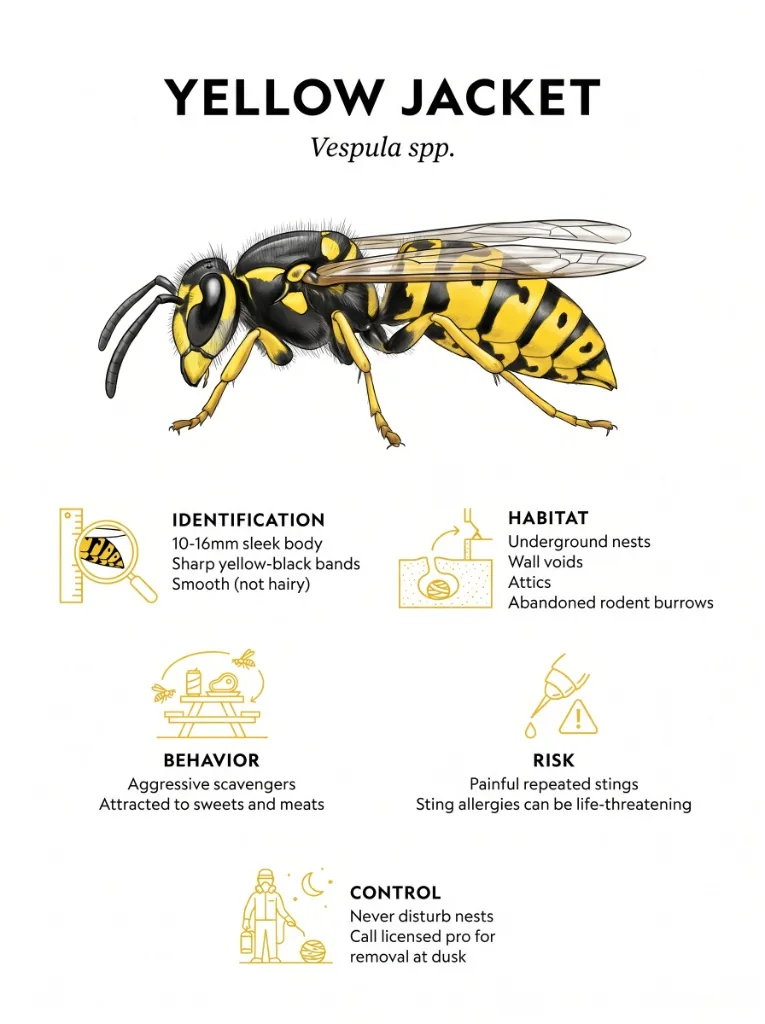
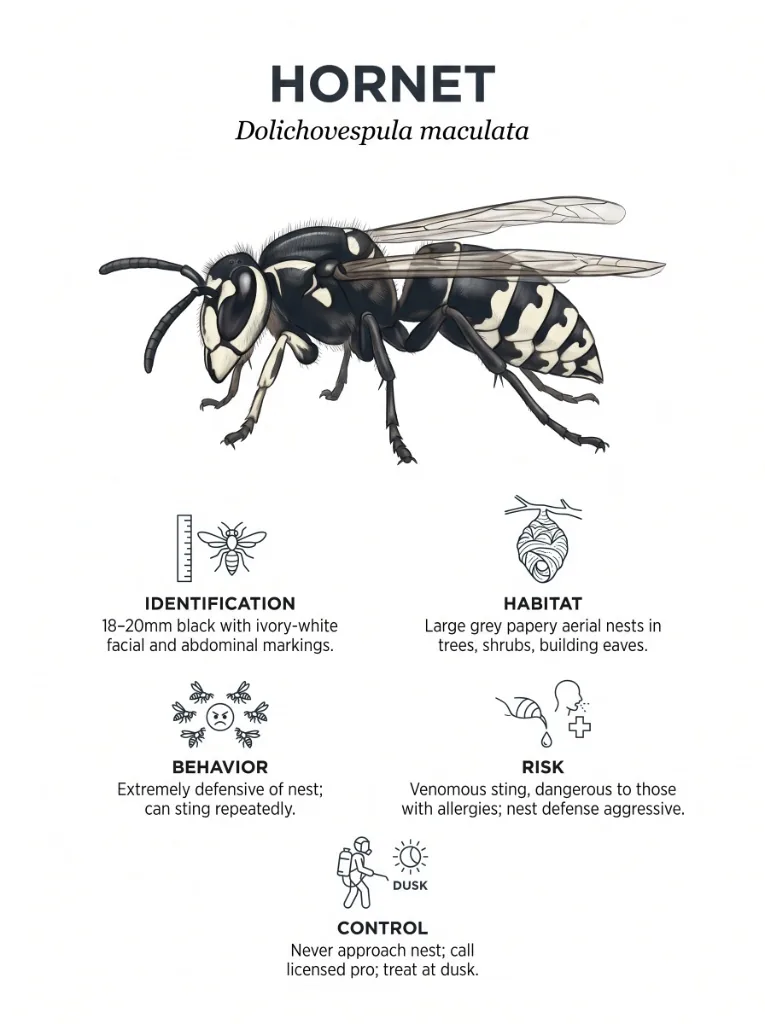
Paper wasp nests are visually distinct from yellow jacket aerial nests (enclosed grey paper football) and from mud dauber nests (mud tubes stuck to walls).

Behavior & Aggression Level

Paper wasps are less defensive than yellow jackets or hornets, but they will attack if their nest is touched, sprayed with an ineffective product, or approached during hot weather when the colony is stressed. Stings can occur when a homeowner does not realize a nest is present — reaching to grab a grill cover, opening a rarely-used shed door, or reaching into a mailbox that hasn't been used in a week.

Colonies are founded in spring by an overwintering fertilized queen who builds the first few cells alone. Workers add through summer, peaking in August. Like yellow jackets, colonies die at first hard frost with only new mated queens surviving to overwinter.

Sting Risk

Paper wasp stings are painful but for most adults are limited to local swelling and discomfort. The exceptions match other stinging insects:

  • Anyone with a known bee/wasp allergy — one sting can trigger anaphylaxis. Carry an EpiPen and treat nests as an emergency.
  • Multiple stings — possible when a nest is directly disturbed, though less likely than with yellow jackets.
  • Children and small pets — smaller body mass, more severe reactions.
  • Stings on the face, in the mouth, or near the eye — always warrant medical evaluation.

Difficulty breathing, swelling beyond the sting site, dizziness, or a widespread rash after a sting is a 911 call.

Common Nesting Spots in Triangle Homes

Paper wasps love protected overhangs. On Triangle homes we routinely find nests in:

  • Front porch and back deck ceilings.
  • Underside of window shutters.
  • Playhouse and swing-set roofs.
  • Grill covers left down overnight.
  • Mailboxes — inside and under the flag mechanism.
  • Attic vents and gable openings.
  • Underside of patio umbrellas.
  • Inside less-used sheds and outbuildings.
  • Under deck railings and inside deck baluster spaces.

Any protected, dry, shaded surface within a few feet of a landing point is potential paper-wasp real estate.

Our Nest Removal Approach

For paper wasp nests in high-traffic areas — doorways, deck seating, above walkways — professional removal is the safest and most reliable path. Our process:

  • On-site inspection to locate all active nests (single-nest sites often have satellites).
  • Timing at dusk or early morning when workers are on the nest and less active.
  • Direct treatment with appropriate aerosol product from a safe distance, wearing appropriate protective equipment.
  • Nest removal after treatment to eliminate the pheromone attractant that draws new queens next season.
  • Perimeter treatment recommendation for homes with recurring paper wasp pressure (older homes with lots of overhangs, homes near tree lines, homes with unused sheds).

Every plan is scoped with a personalized quote based on nest count, location, and accessibility.

Prevention Tips

  • Do a spring perimeter walk in April/May to find early nests before they grow — small nests are much easier to remove.
  • Inspect grill covers, mailboxes, and shed interiors regularly.
  • Trim overgrown shrubs away from eaves and porch ceilings.
  • Repair torn attic vent screens.
  • Consider a preventive perimeter service if your home has many eaves, porches, or outbuildings.
  • Do not spray a nest with a garden-hose insecticide during daylight — the range is too short and workers will attack.
  • Anyone with a known wasp allergy should carry an EpiPen year-round.

Frequently asked

Paper Wasp questions homeowners ask

Are paper wasps as dangerous as yellow jackets?
Generally less aggressive — paper wasps sting mainly when directly disturbed, whereas yellow jackets can attack anything approaching a ground nest. The sting itself is comparably painful, and for allergic individuals both are equally dangerous. Nest location (over doorways, seating areas) can matter more than species in terms of risk.
Can I just knock the nest down with a broom?
Not safely — even small paper wasp colonies will defend the nest, and multiple stings from a broom-knockdown are common. Professional treatment eliminates the colony first, then removes the nest. It's faster, cheaper than an ER visit, and much safer.
Will they come back if I destroy the nest?
That specific colony will not — colonies die at first frost, with only mated queens overwintering. But the site is likely attractive to next year's queens. Removing the old nest and, if pressure is chronic, adding a preventive perimeter service, is how we manage that risk.
What time of year should I have paper wasps treated?
Spring and early summer are ideal — colonies are small, defensive behavior is lower, and treatment is easier. Late summer nests are larger and more defensive but still routinely treated. If a nest is over a doorway or seating area, treat it as soon as you notice it regardless of season.
Are paper wasps beneficial to have around?
They do prey on garden caterpillars and other insects, which has ecological value. When a nest is not in a high-traffic area — say, on a fence line at the back of the property — leaving it may be reasonable. When it is above a door, deck, or play area, safety comes first.

Related pests

More in stinging insects

Browse all pests