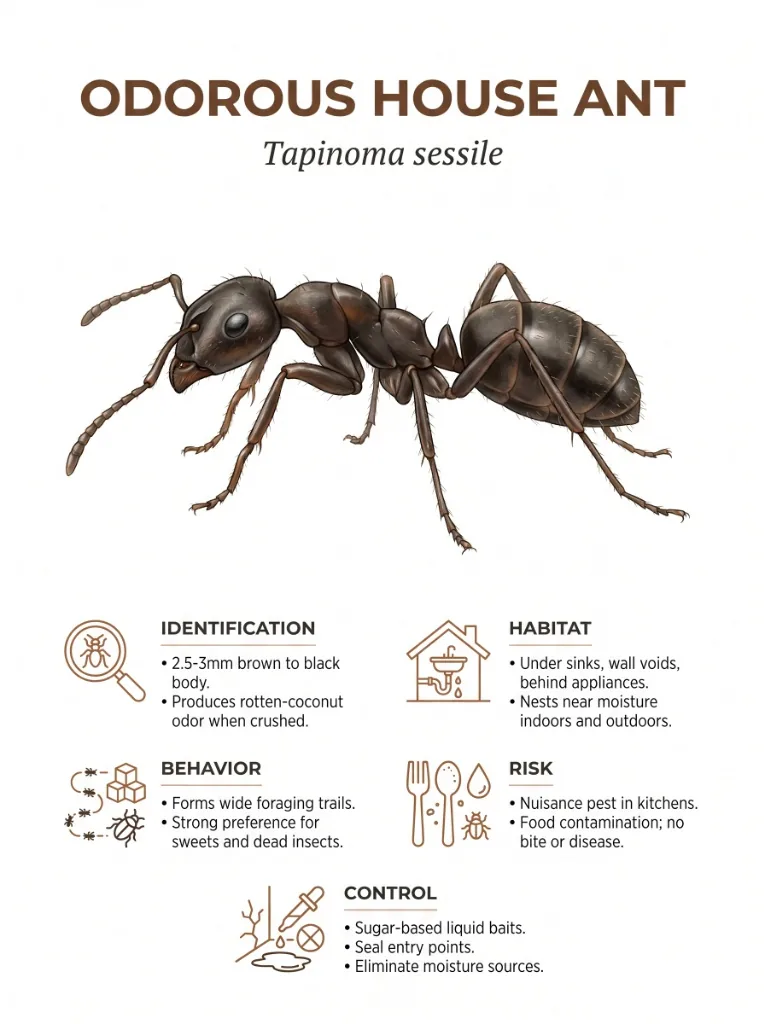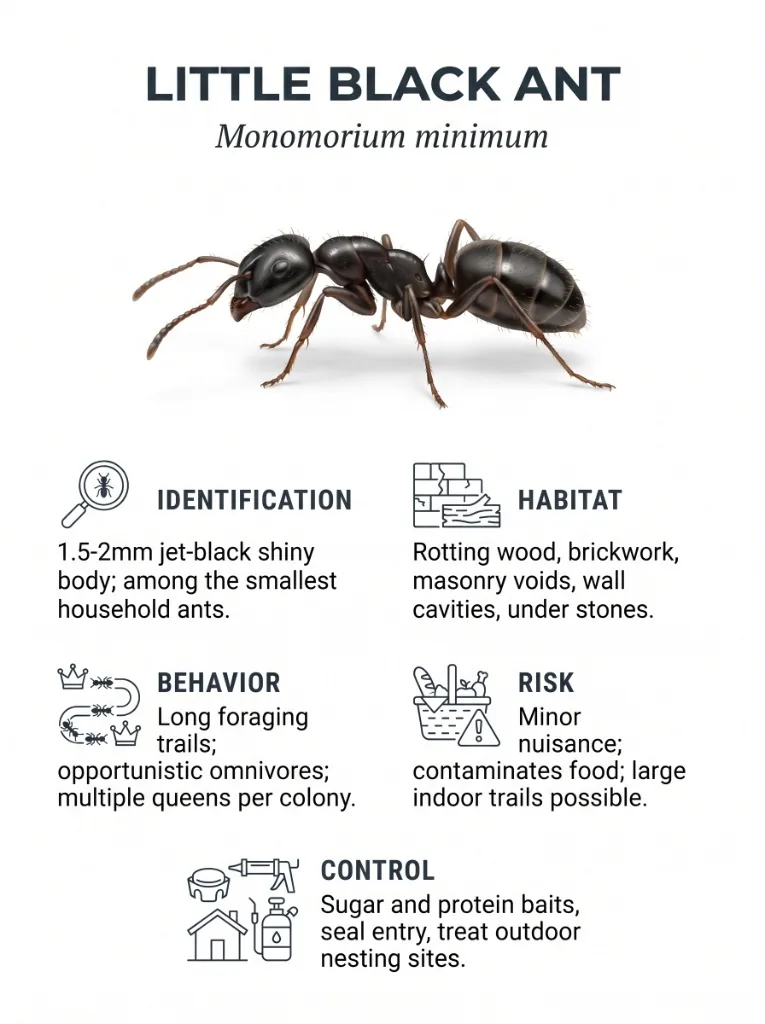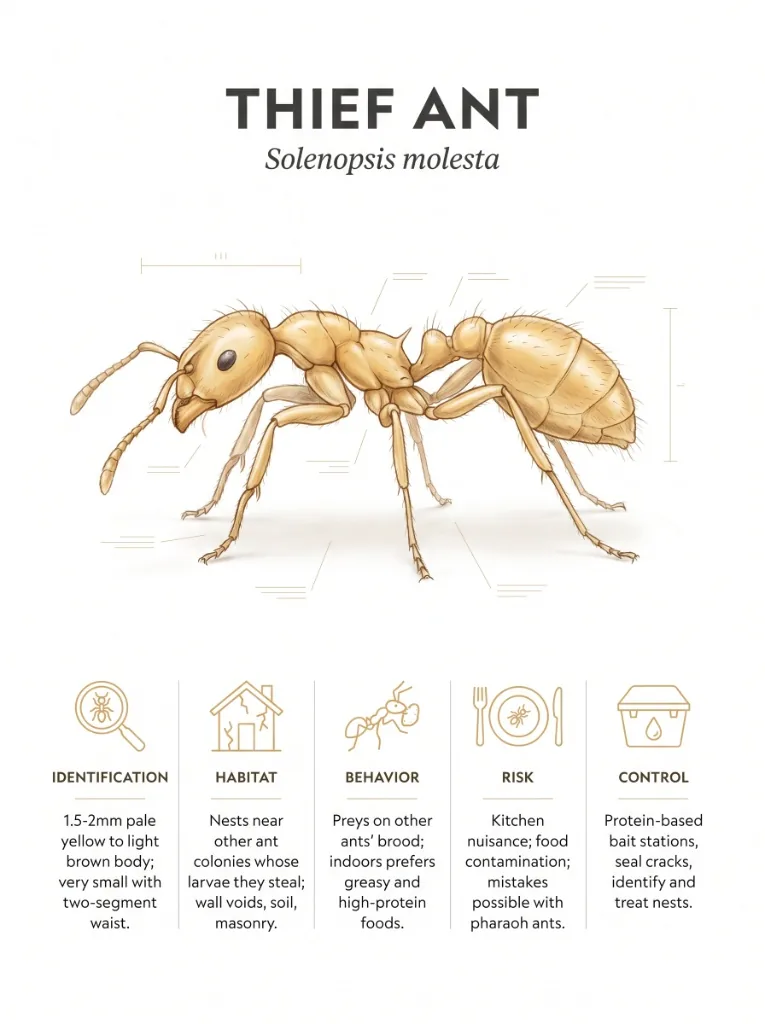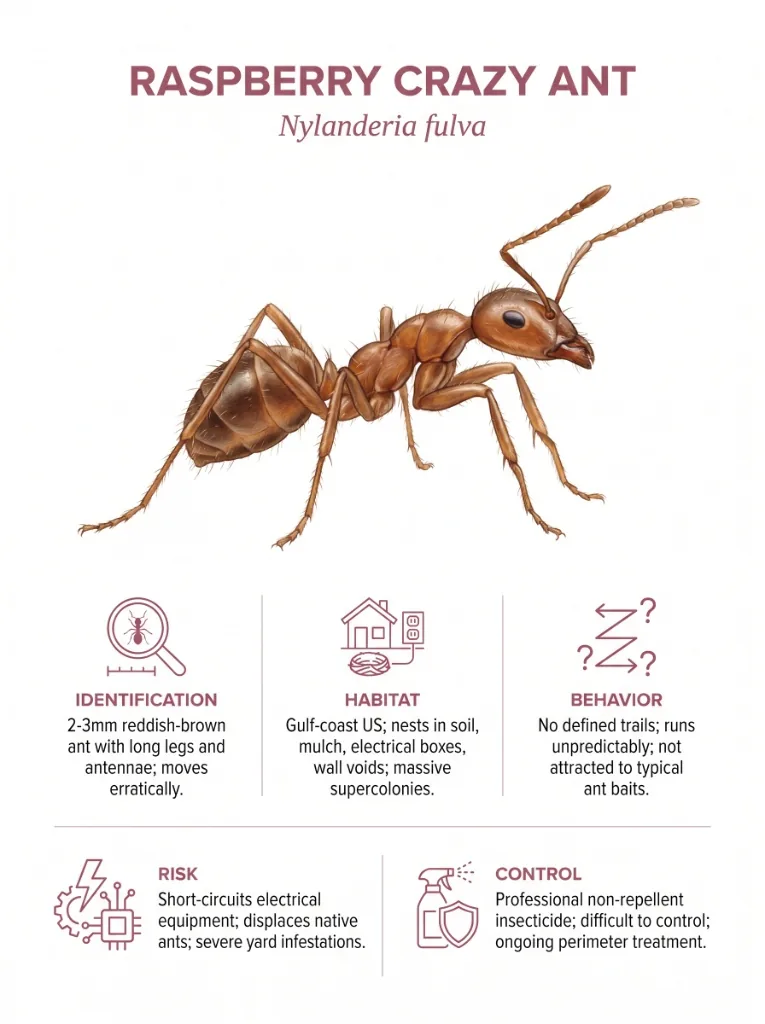
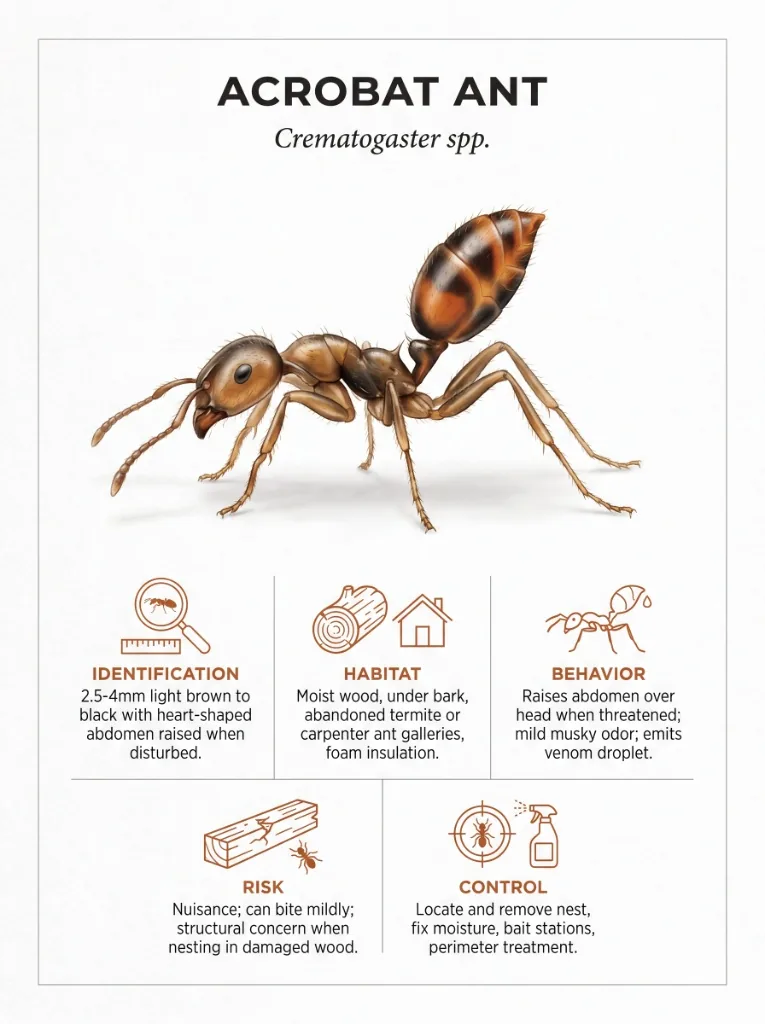
Acrobat Ant (Crematogaster spp.) identification infographic showing size, habitat, behavior, risk, and control
Low concern

Acrobat Ant — Identification & Control

Crematogaster spp.

Size
2.5–4 mm
Category
Ants

About the acrobat ant

Acrobat ants (Crematogaster spp.) get their name from a distinctive defensive behavior — when threatened, workers raise their heart-shaped abdomen up over their head and thorax, giving them an unmistakable acrobatic profile. Adults are small (2.5-4 mm), light brown to reddish-black, with that pointed heart-shaped abdomen. They are a common but often-misidentified ant in the Triangle.

Acrobat ants matter because — like carpenter ants — they nest inside moisture-damaged wood, and their presence indoors is a leaked-roof or wet-crawl-space indicator. They also nest inside foam insulation, hollow doors, and wall voids. Effective control means finding both the ant colony and the moisture source that created the harborage.

Quick ID

2.5–4 mm light brown to black with heart-shaped abdomen raised when disturbed.

In the Triangle

Occasional in Triangle homes, especially houses with EIFS / foam-insulated exteriors.

Think you have acrobat ants?

Free inspection from a licensed Castle Exterminators technician — Durham, Chapel Hill, Raleigh, Cary & the Triangle. We'll confirm the species and recommend a treatment plan.

Request Free Inspection (919) 606-8686
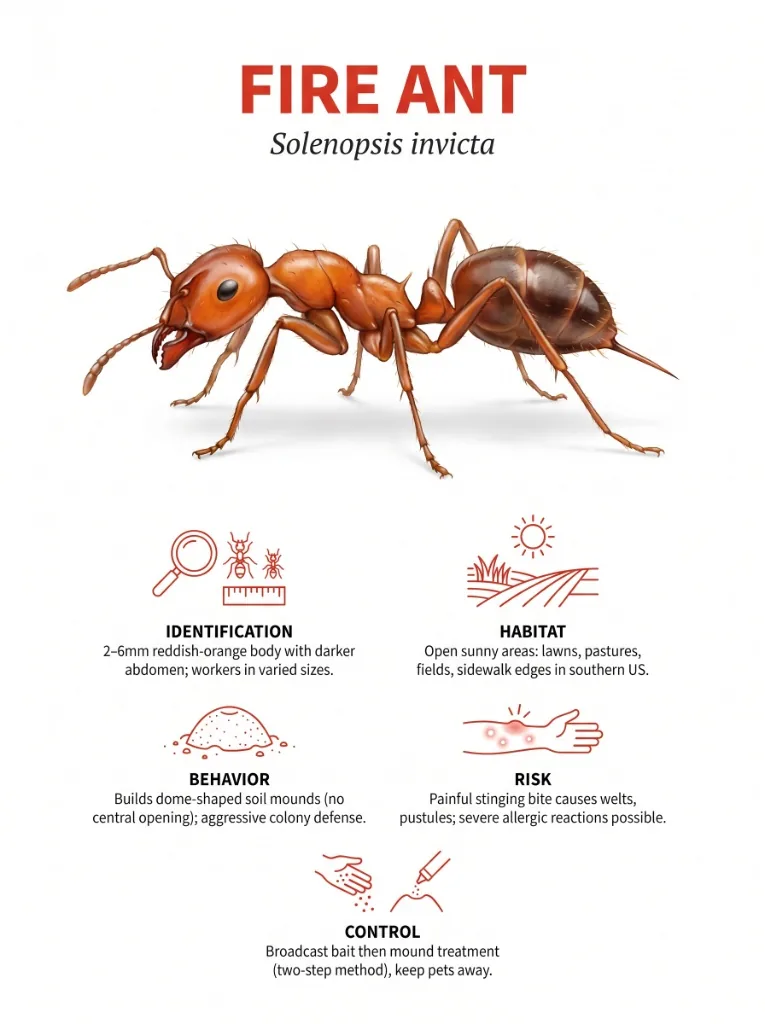
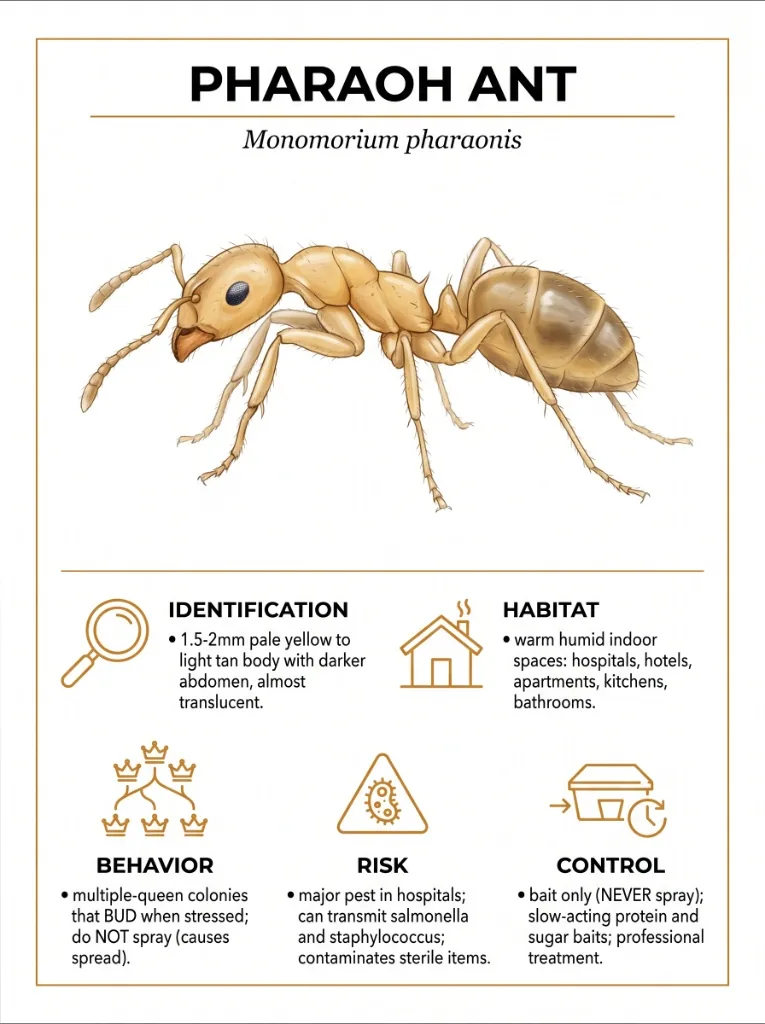
Identifying Acrobat Ants

  • Size & color — 2.5-4 mm, ranging from light brown to reddish-black to fully black depending on species.
  • Heart-shaped abdomen — the abdomen is pointed and, when viewed from above, distinctly heart-shaped.
  • Defensive posture — when disturbed, workers raise the abdomen up over the head. This is the fastest field ID.
  • Two-node waist visible with a magnifier.
  • Nest evidence — small piles of coarse frass (mixed with dead ant parts) under exit holes, similar to carpenter ants.

Where They Nest & Why That Matters

Acrobat ants preferentially colonize moisture-damaged wood, foam insulation, and abandoned carpenter ant or termite galleries. That makes indoor acrobat ants a two-part problem, exactly like carpenter ants: (1) the colony, and (2) the underlying moisture issue that created their harborage.

Common indoor nest sites in Triangle homes:

  • Wood window and door frames with water damage.
  • Roof-line eaves and fascia with hidden leaks.
  • Deck ledger boards and rim joists with moisture damage.
  • Foam board insulation, especially around plumbing penetrations.
  • Hollow interior doors.
  • Wall voids adjacent to plumbing sweat or slow leaks.
  • Attic insulation around bathroom exhaust vents.

Our Treatment Approach

  • Trail tracing to identify indoor nest location and outdoor parent colony (often in a tree or landscape woodpile).
  • Non-repellent perimeter and nest treatments — repellent sprays cause acrobat ants to bud, just like odorous house ants and carpenter ants.
  • Sugar-based bait placements where trails cross harborage.
  • Moisture assessment — the moisture problem that created the harborage almost always needs to be addressed to prevent recolonization.
  • Referral for structural moisture correction where warranted.

Every plan is scoped with a personalized quote based on nest location and moisture conditions.

Prevention Tips

  • Fix any roof, gutter, window-flashing, or plumbing leak the moment you notice it.
  • Address damp crawl spaces — consider encapsulation for chronic humidity.
  • Replace foam board insulation showing exit holes or trails.
  • Trim tree limbs and shrubs off the house — acrobat ants often follow limbs onto roofs.
  • Do not spray a visible trail with grocery-store bug spray.
  • If seeing indoor acrobat ants, treat it as both an ant problem AND a moisture-inspection prompt.

Frequently asked

Acrobat Ant questions homeowners ask

What is the fastest way to tell an acrobat ant from other ants?
The defensive posture. When disturbed, acrobat ant workers raise their heart-shaped abdomen straight up over the head and thorax. No other Triangle ant does this. If a small ant curls its abdomen upward when you touch it with a pencil, it is an acrobat ant.
Are acrobat ants as damaging as carpenter ants?
Similar in kind but usually smaller in scale. Acrobat ants excavate existing moisture-damaged wood or foam insulation rather than sound wood, so the direct structural damage is typically less than carpenter ants. The presence of both, however, is a strong moisture indicator that needs addressing.
Do acrobat ants bite?
They can sting mildly if handled, but they are not aggressive and they do not swarm out to defend nests the way fire ants do. Medically, they are not significant.
Why do I have both acrobat ants and carpenter ants?
Both species prefer moisture-damaged wood, so a home with a hidden moisture problem often hosts both. Treatment resolves the ants; the moisture repair prevents recolonization. Address them together.
Can I treat them myself?
Because acrobat ants respond to repellent sprays by budding — splitting the colony into more nests — DIY sprays typically make the problem worse. Non-repellent products and targeted baits are the correct approach, and both are professional-grade tools.

Related pests

More in ants

Browse all pests