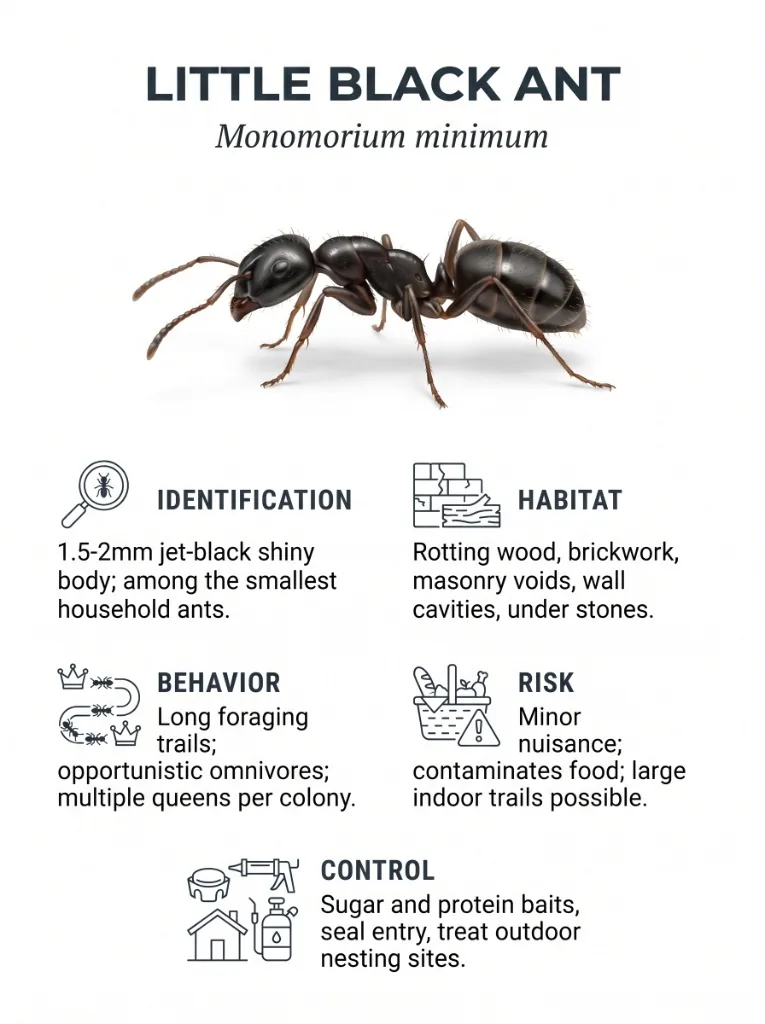
Little Black Ant (Monomorium minimum) identification infographic showing size, habitat, behavior, risk, and control
Low concern

Little Black Ant — Identification & Control

Monomorium minimum

Size
1.5–2 mm
Category
Ants

About the little black ant

The little black ant (Monomorium minimum) is a familiar Triangle household ant — very small (1.5-2 mm), uniformly shiny jet-black, and a persistent kitchen-counter and pantry visitor during warm months. Their small size lets them exploit gaps and cracks other ants cannot, and their large multi-queen colonies mean sightings tend to escalate quickly if the trail is not treated correctly.

Like several other small NC ants, little black ants will bud if sprayed with a repellent insecticide. Effective control uses baits and non-repellent products so the colony is eliminated as a whole rather than fragmented. They are not medically significant — the problem is contamination of food and countertops, and the sheer scale of the trails during peak activity.

Quick ID

1.5–2 mm jet-black shiny body; among the smallest household ants.

In the Triangle

Frequently found nesting in older Durham brick foundations and stone garden walls.

Think you have little black ants?

Free inspection from a licensed Castle Exterminators technician — Durham, Chapel Hill, Raleigh, Cary & the Triangle. We'll confirm the species and recommend a treatment plan.

Request Free Inspection (919) 606-8686
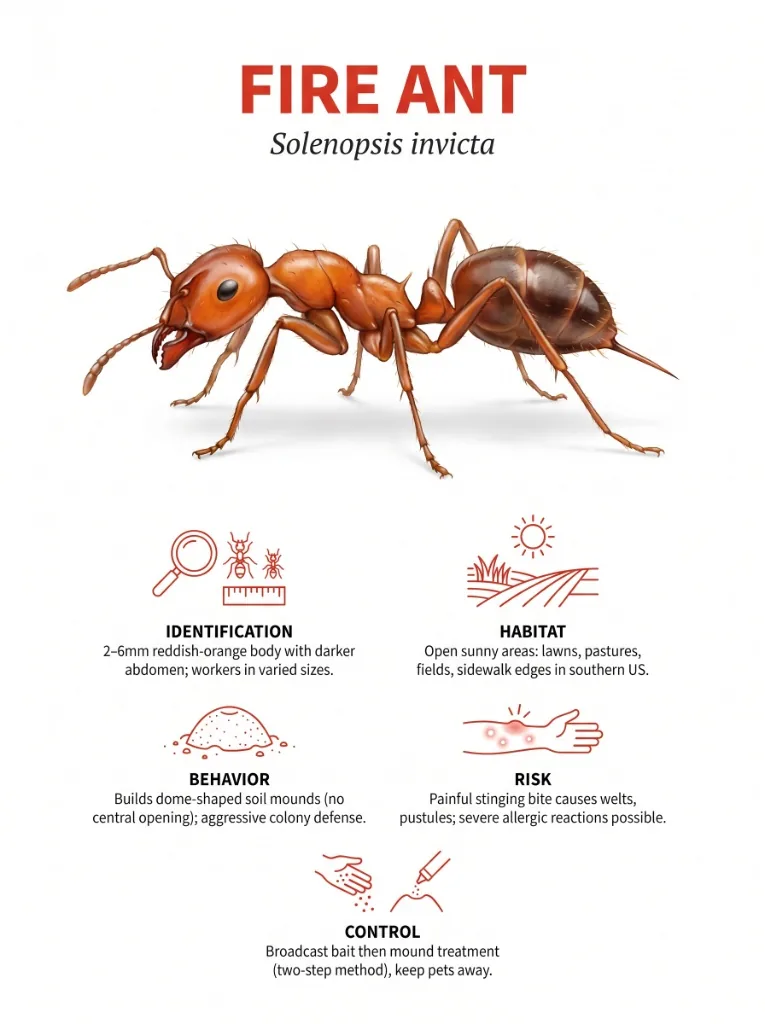
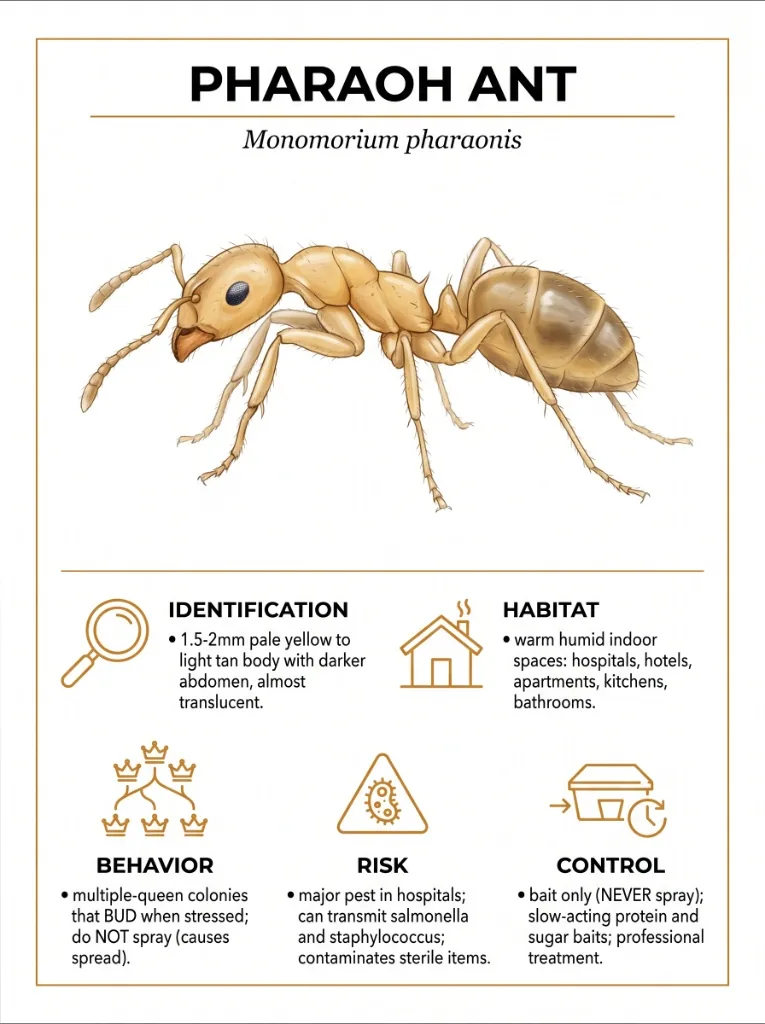
Identifying Little Black Ants

  • Size — 1.5-2 mm, one of the smallest ants a Triangle homeowner will see indoors.
  • Color — uniformly shiny jet-black.
  • Body — two-node waist visible only under magnification.
  • Behavior — well-defined trails, often along corners of counters, backsplashes, and inside drawers.
  • Trail width — narrow, but very long distances between nest and food source.

Their small size makes them frequent hitchhikers on grocery items, which is a common way infestations start.

Where They Nest & Where They Feed

Outdoor nests are found under stones, in mulch, under logs, in landscape timbers, and along fence lines. Indoor nests establish in wall voids, behind baseboards, inside cabinet frames, and in insulation around plumbing lines. Because colonies contain multiple queens and often maintain multiple satellite nests, the visible trail may extend from an indoor satellite nest to an outdoor parent colony ten to fifteen meters away.

Diet is broad — sweets, greasy residue, pet food crumbs, and small dead insects. They are particularly attracted to sugar residue on counters, honey and syrup drips, and any spilled soda.

Our Treatment Approach

  • Trail follow to locate both the indoor entry and, if possible, the outdoor parent colony.
  • Sugar-based baits where trails cross harborage — little black ants are strongly attracted to sugar baits.
  • Non-repellent perimeter treatments that workers carry back through the colony.
  • Interior crack-and-crevice treatments at entry points.
  • Ongoing exterior perimeter service for chronic-pressure properties.

Every plan is scoped with a personalized quote based on trail extent and colony access.

Prevention Tips

  • Wipe counters, stove, and backsplash nightly — even tiny sugar residues attract them.
  • Store pantry sugars, honey, syrup, and sweet condiments in tightly sealed containers.
  • Inspect grocery items (especially bags of sugar and cereal) before putting them away.
  • Do not spray visible trails with grocery-store insecticide.
  • Seal utility penetrations behind sinks and appliances.
  • Pull mulch back from the foundation and reduce landscape stones/timbers within 30 cm of exterior walls.

Frequently asked

Little Black Ant questions homeowners ask

What's the difference between a little black ant and an odorous house ant?
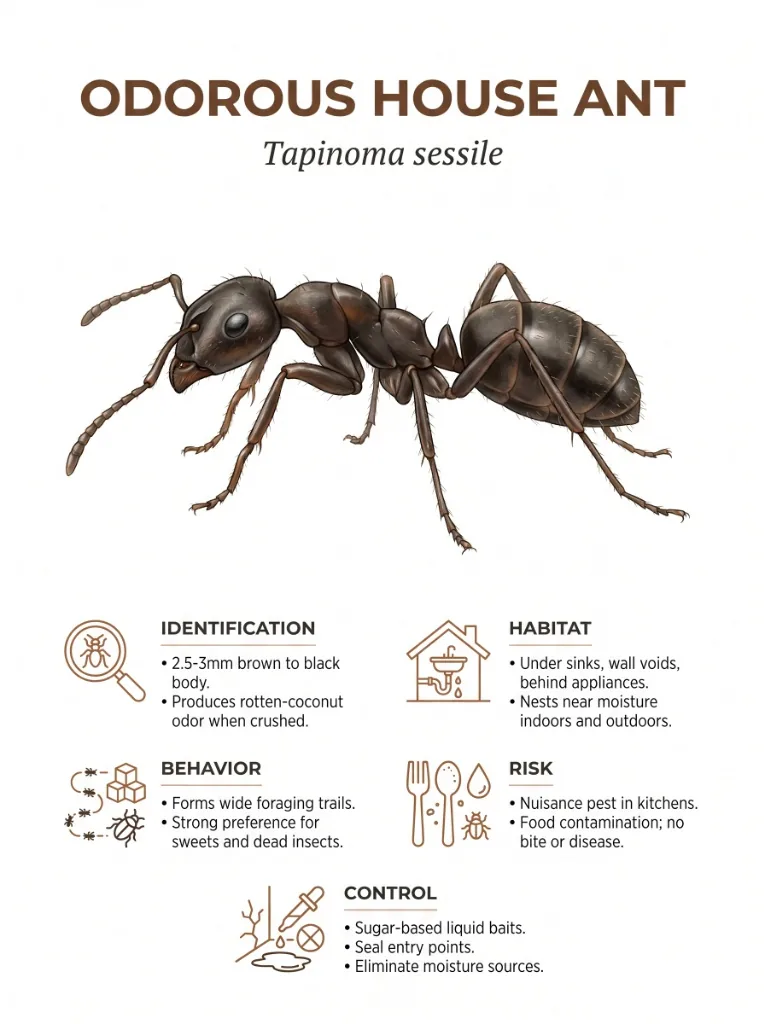
Both are small dark ants, but little black ants are significantly smaller (1.5-2 mm vs. 2.5-3 mm) and uniformly shiny jet-black. Odorous house ants are dark brown to black and — the clincher — release a rotten-coconut smell when crushed. Little black ants do not have that smell.
Are they dangerous?
Not medically. They do not sting meaningfully and are not disease vectors. The concerns are contamination of counters, pantry items, and food surfaces during trail activity.
Why do they come back after I spray?
For little black ants specifically, repellent sprays commonly cause colony budding — one colony split into several, spreading the problem. Baits and non-repellent products are the effective approach.
How long does treatment take to work?
Trail activity typically drops within a few days as workers carry actives back to the queens. Full elimination usually takes two to four weeks. Follow-up visits are standard.
Will they come back next year?
Outdoor colonies persist in mulch, landscape timbers, and along foundations. Ongoing exterior perimeter service dramatically reduces new-season pressure. Homes without any exterior service commonly see them return each spring.

Related pests

More in ants

Browse all pests