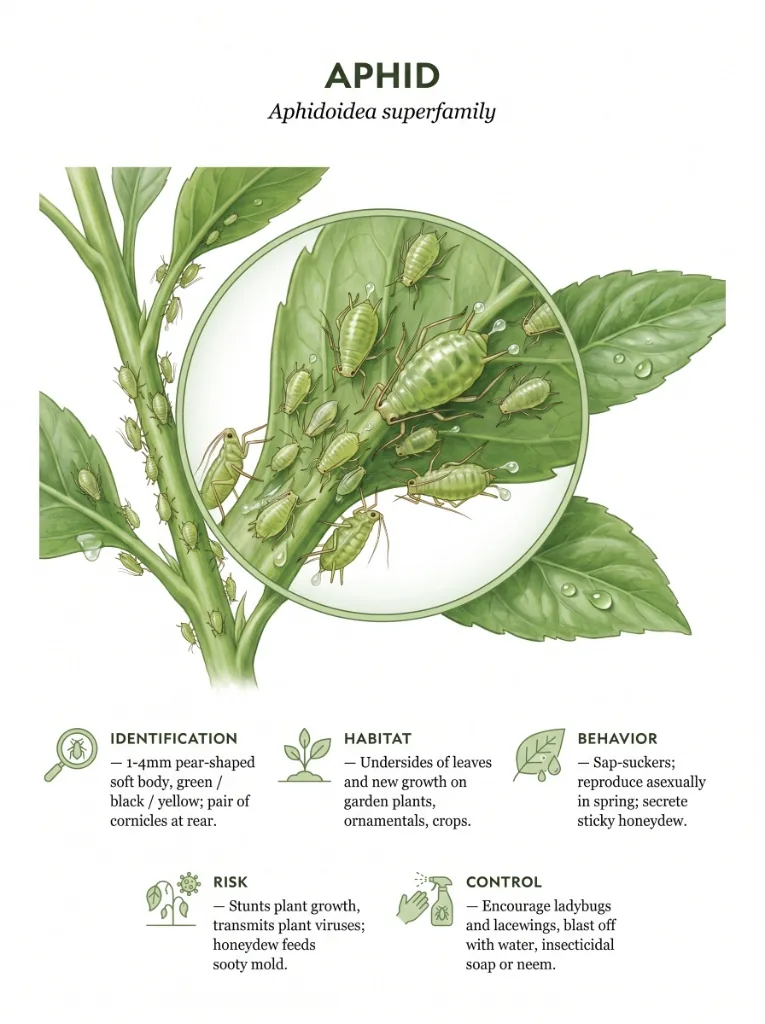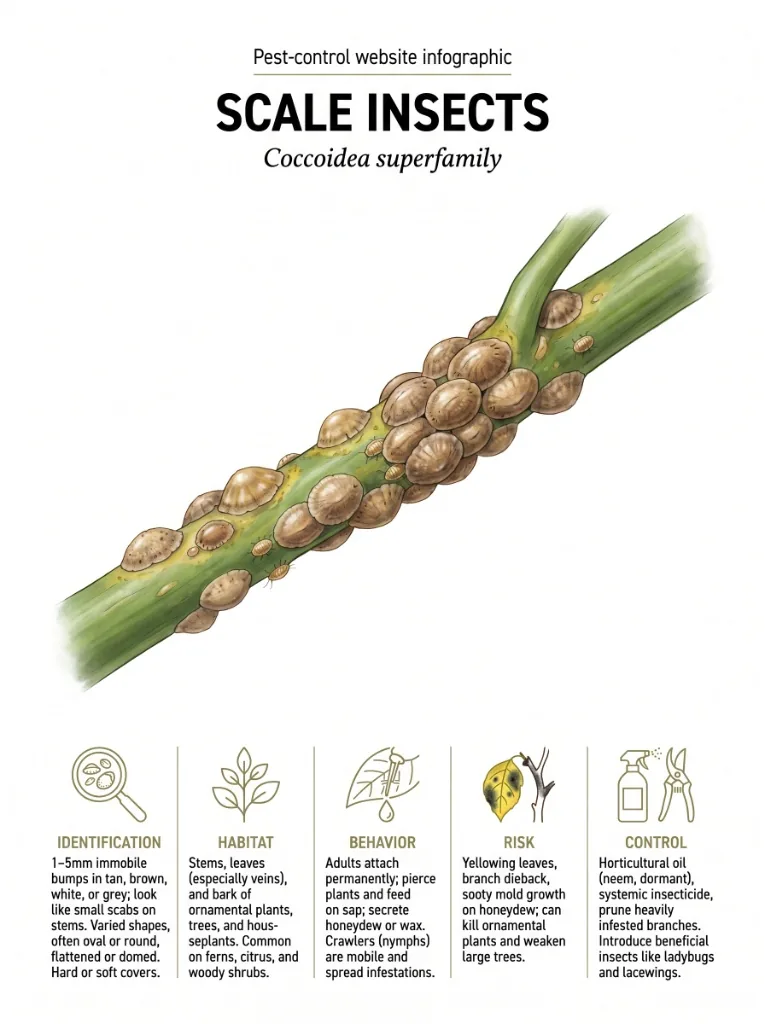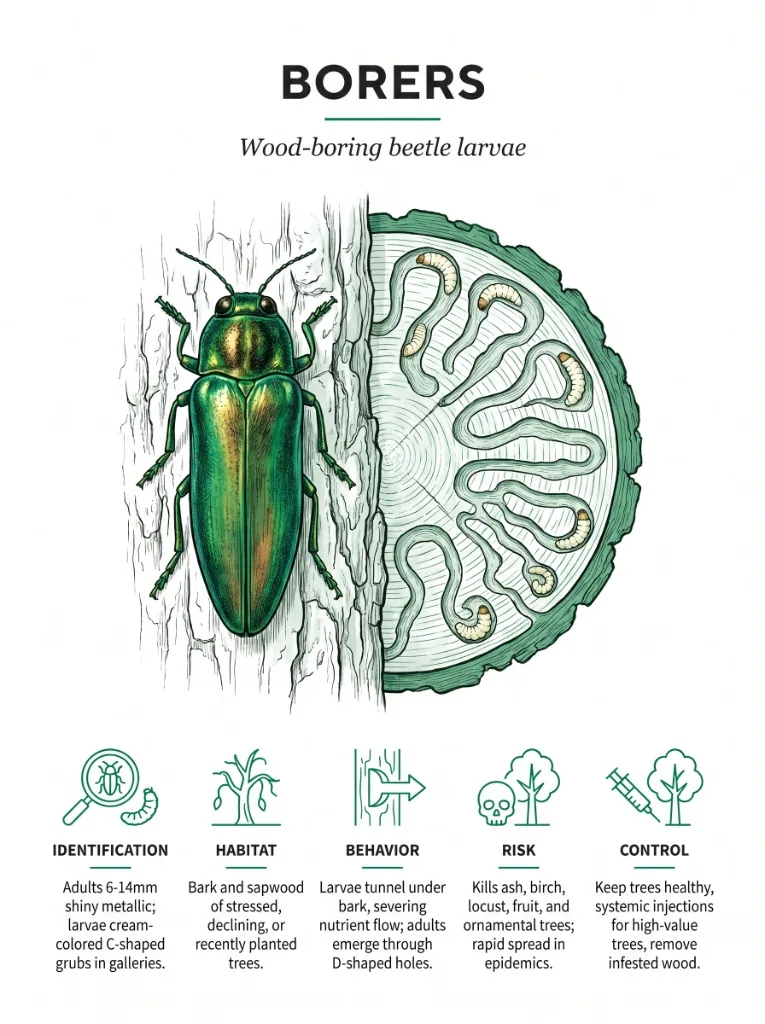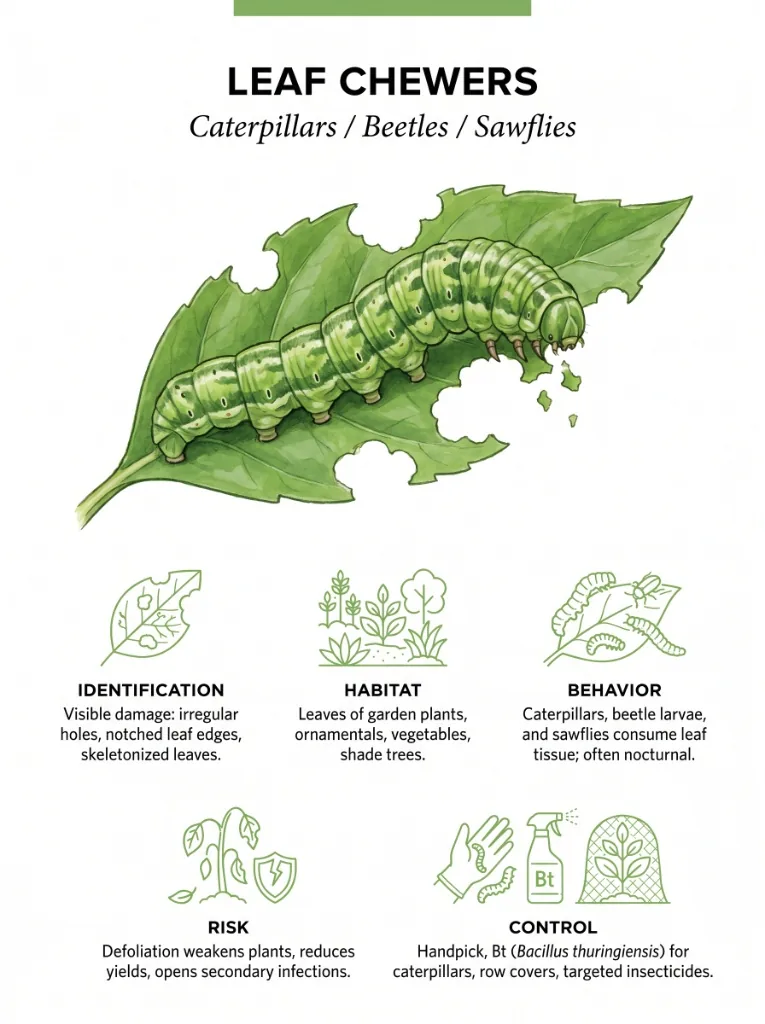
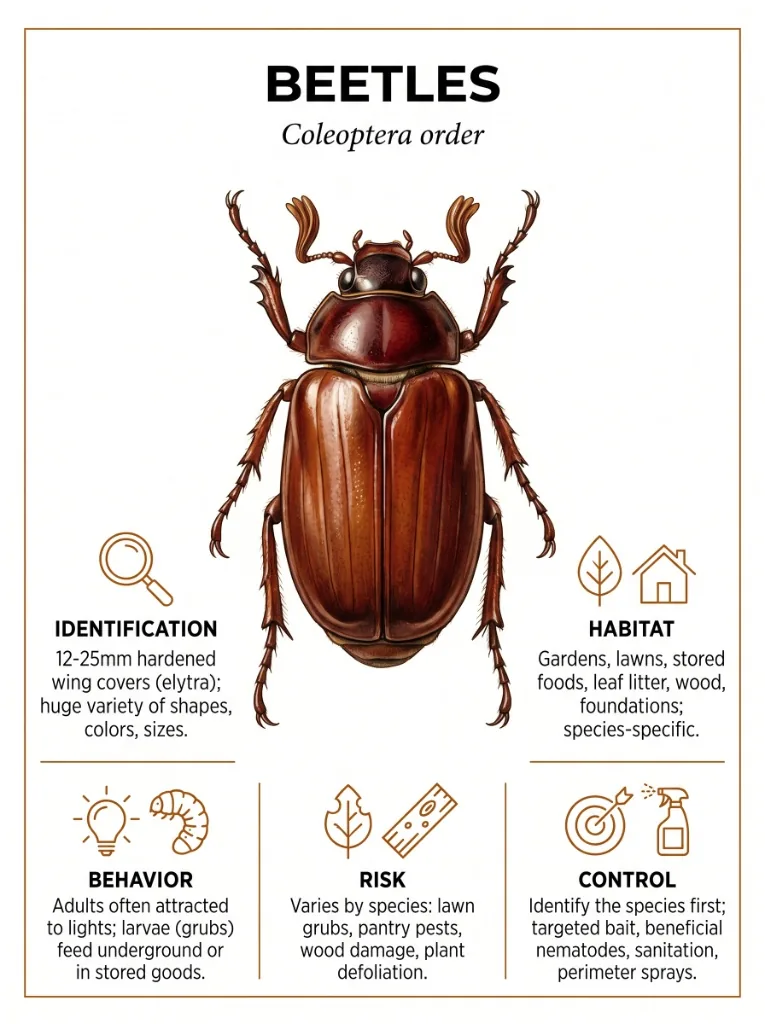
Beetles (Coleoptera) (Coleoptera order) identification infographic showing size, habitat, behavior, risk, and control
Low concern

Beetles — Identification & Control

Coleoptera order

Size
12–25 mm
Category
Garden & Outdoor

About the beetles (coleoptera)

"Beetle" covers an enormous range of insects — over 350,000 described species worldwide, more than any other insect order — so the right response depends entirely on which kind you are dealing with. In and around Triangle homes, the beetles that actually matter fall into three practical groups: pantry beetles that infest stored food (flour beetles, grain weevils, cigarette beetles), lawn and garden beetles whose larvae damage turf and plants (Japanese beetle grubs, June bugs), and structural beetles whose larvae feed on wood in walls, floors, or furniture (powderpost beetles).

Correct identification matters more with beetles than almost any other pest group, because the three categories require completely different responses — discarding contaminated pantry goods, treating a lawn with beneficial nematodes or targeted grub control, or assessing structural wood damage. Misidentifying a harmless ground beetle as a threat (or vice versa) wastes time and money, which is why our first step with any beetle call is always confirming the species before recommending treatment.

Quick ID

12–25 mm hardened wing covers (elytra); huge variety of shapes, colors, sizes.

In the Triangle

Universally present in the Triangle; identification is key to deciding whether action is needed.

Think you have beetles (coleoptera)s?

Free inspection from a licensed Castle Exterminators technician — Durham, Chapel Hill, Raleigh, Cary & the Triangle. We'll confirm the species and recommend a treatment plan.

Request Free Inspection (919) 606-8686
The Three Beetle Categories That Matter Indoors

  • Pantry beetles — small reddish-brown beetles found in flour, cereal, pet food, or spices; usually arrive already inside a purchased product.
  • Lawn and garden beetles — Japanese beetles and their grubs, which skeletonize leaves as adults and damage turf roots as larvae.
  • Structural / wood-boring beetles — powderpost beetles whose larvae tunnel through structural lumber, furniture, and flooring over years, leaving small round exit holes and fine powdery frass.

Beneficial beetles — ladybugs, ground beetles, rove beetles — are also common in Triangle yards and should generally be left alone; they help control aphids, grubs, and other pests naturally.

Beetle Control by Category

Pantry beetle control starts with locating and discarding the contaminated product, then a thorough cabinet clean-out and switching to airtight storage. Lawn grub control typically uses beneficial nematodes or a targeted grub treatment timed to the beetle's life cycle. Structural wood-boring beetles require an inspection to confirm the species is still active (fresh, pale exit holes and powdery frass) before any wood treatment or, in serious cases, structural repair is recommended.

Frequently asked

Beetles (Coleoptera) questions homeowners ask

Are the beetles I'm finding in my pantry dangerous?
No — pantry beetles contaminate stored food with larvae, cast skins, and frass, but they do not bite, sting, or spread disease. The concern is food waste and re-infestation, not health risk.
How do I know if wood-boring beetles are still active in my home?
Fresh exit holes look pale and clean with fine powdery frass beneath them; old, discolored holes with no fresh powder usually indicate a past, inactive infestation. An inspection can confirm which you have.

Related pests

More in garden & outdoor

Browse all pests