
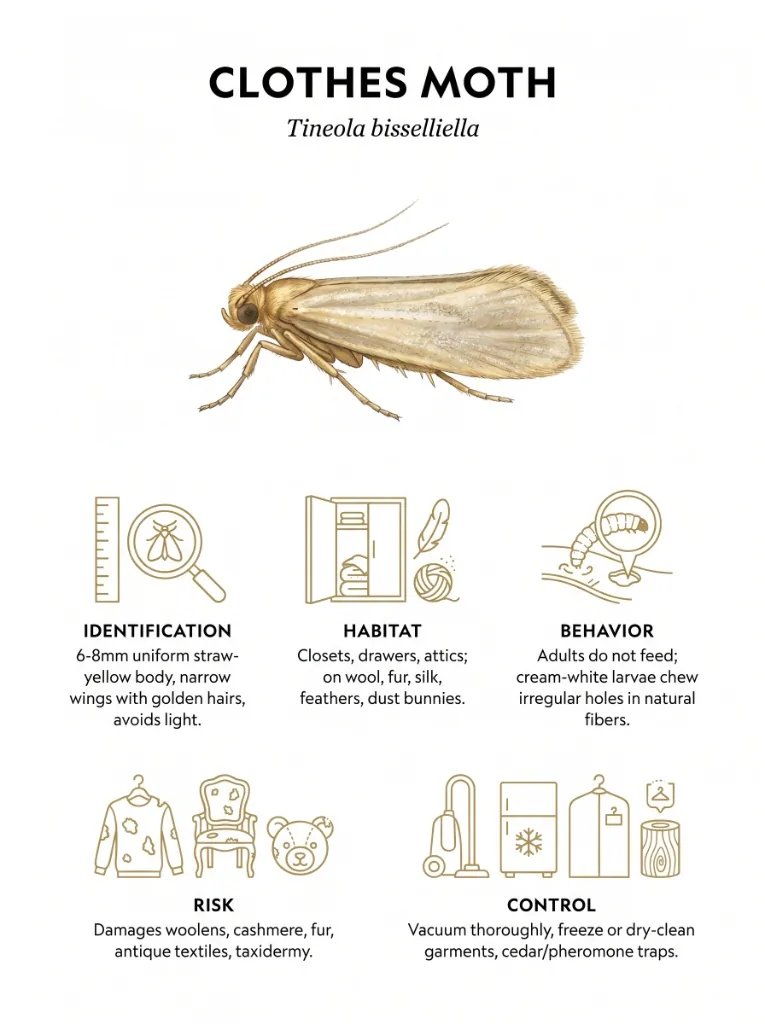
Clothes Moth (Tineola bisselliella) identification infographic showing size, habitat, behavior, risk, and control
Moderate concern

Clothes Moth — Identification & Control

Tineola bisselliella

Size
6–8 mm
Category
Fabric & Pantry

About the clothes moth

Clothes moths are small, straw-colored moths that behave very differently from the moths most people picture — they avoid light almost entirely, fly poorly and briefly, and are most often noticed resting on a wall near a closet rather than fluttering around a porch light. That light-avoidance is exactly why infestations take hold undisturbed in the back of closets, folded stacks of sweaters, under furniture, and inside rarely-opened storage boxes and attics.

Adult clothes moths do not feed at all; every bit of fabric damage comes from the larvae, small cream-white caterpillars that spin silk feeding tubes or patches as they chew through wool, cashmere, silk, fur, feathers, and felt. They are specifically drawn to fibers soiled with body oils, sweat, or food stains, which is one reason infestations often start in worn-but-unwashed items placed into storage. Left unchecked, an infestation can seriously damage heirloom clothing, rugs, and even taxidermy.

Quick ID

6–8 mm uniform straw-yellow body, narrow wings with golden hairs; avoids light.

In the Triangle

A real risk in Triangle homes with stored woolens, vintage clothing, and rarely-opened closets.

Think you have clothes moths?

Free inspection from a licensed Castle Exterminators technician — Durham, Chapel Hill, Raleigh, Cary & the Triangle. We'll confirm the species and recommend a treatment plan.

Request Free Inspection (919) 606-8686
Spotting Clothes Moth Damage Early

Look for irregular holes clustered in patches rather than scattered randomly, small silken tubes or patches attached to the fabric surface, and fine sand-like frass near the damage. Unlike carpet beetles, clothes moth larvae prefer soiled or dirty fabric, so damage often concentrates on underarms, collars, and cuffs of stored garments rather than clean areas.

Clothes Moth Control Steps

  • Thoroughly vacuum closets, baseboards, and under furniture, then dispose of the vacuum bag or canister contents outside.
  • Dry clean or launder susceptible items before long-term storage — this removes both the food source and any eggs already present.
  • Freeze small infested items for at least 72 hours in a deep freezer to kill eggs and larvae.
  • Use airtight storage containers rather than cardboard boxes for wool and cashmere items.
  • Cedar blocks and pheromone traps help monitor and deter adults but will not eliminate an active larval infestation on their own.

Frequently asked

Clothes Moth questions homeowners ask

Do clothes moths only attack wool?
Wool and cashmere are the most common targets, but clothes moth larvae also damage silk, fur, feathers, and blended fabrics containing natural fibers, especially if soiled with body oils or food residue.
Are cedar blocks enough to stop an infestation?
Cedar can deter new egg-laying to some degree but will not kill existing larvae or eggs in an already-infested item. Cleaning, freezing, or professional treatment is needed to actually resolve an active infestation.

Related pests

More in fabric & pantry

Browse all pests