Indian Meal Moth (Pantry Moth)
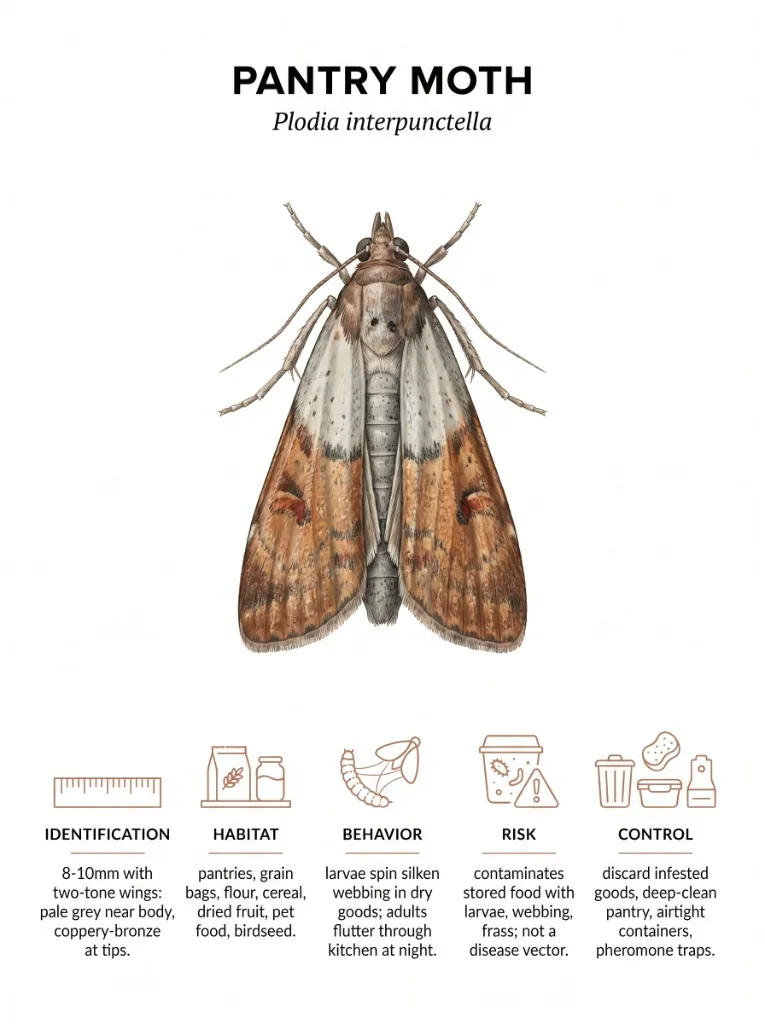
Plodia interpunctella
About the indian meal moth (pantry moth)
Indian meal moths — commonly called pantry moths — are the small two-toned moths (pale grey near the body, coppery-bronze at the wing tips) that flutter through your kitchen at night. The larvae spin silken webbing inside grain bags, flour, cereal, dried fruit, birdseed, and pet food, contaminating it with larvae and frass. Once they're established, you have to discard infested goods, deep-clean the pantry, switch to airtight containers, and use pheromone traps to catch surviving adults.
Quick ID
8–10 mm with two-tone wings: pale grey near the body, coppery-bronze at the wing tips.
In the Triangle
Very common in Triangle pantries; often arrives hidden inside a single contaminated bag of birdseed or flour.
Think you have indian meal moth (pantry moth)s?
Free inspection from a licensed Castle Exterminators technician — Durham, Chapel Hill, Raleigh, Cary & the Triangle. We'll confirm the species and recommend a treatment plan.
Request Free Inspection (919) 606-8686