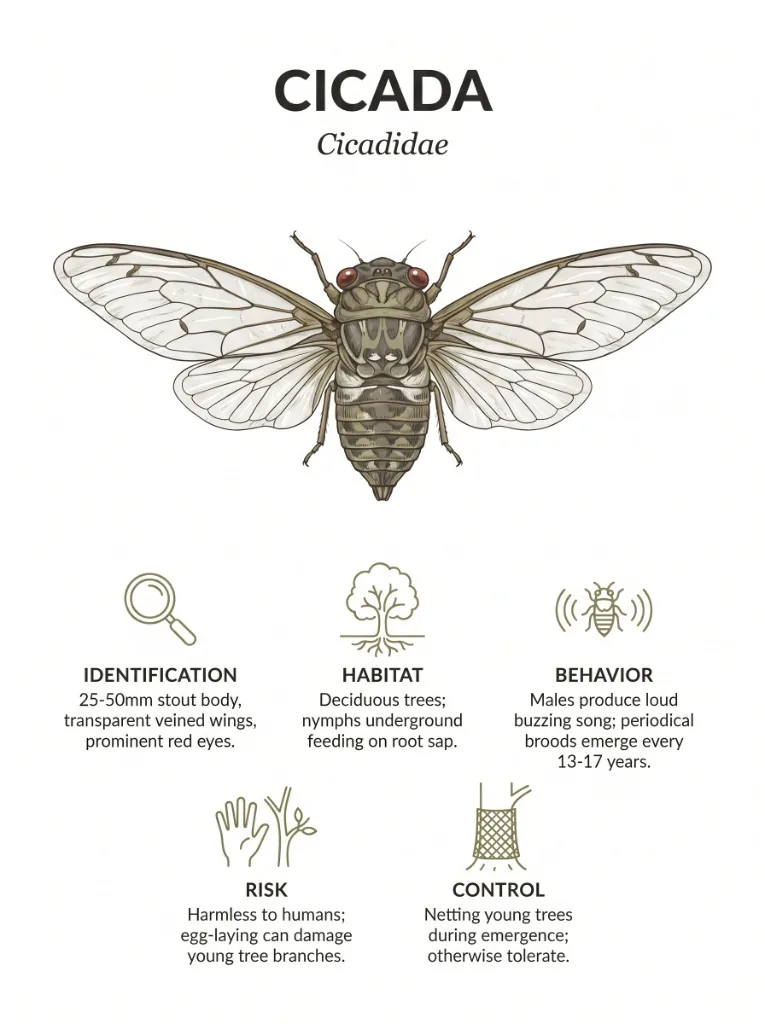
Cicada (Cicadidae family) identification infographic showing size, habitat, behavior, risk, and control
Low concern

Cicada — Identification & Control

Cicadidae family

Size
25–50 mm
Category
Flies & Flying Pests

About the cicada

Cicadas are large, robust insects best known for the loud, buzzing chorus male cicadas produce in summer using specialized structures called tymbals on their abdomen — one of the loudest sounds produced by any insect. Despite the size and noise, cicadas are completely harmless to people and pets: they do not bite or sting defensively, and adults live only a few weeks after emerging, focused entirely on mating.

Most cicadas Triangle residents see and hear every summer are annual, or "dog-day," cicadas, whose nymphs spend one to a few years underground feeding on tree roots before emerging each year. North Carolina also lies within the range of several periodical cicada broods, which emerge in massive, synchronized numbers every 13 or 17 years. The only meaningful damage from either type comes from females depositing eggs in pencil-thick young tree branches, occasionally causing branch tips to wilt and die back ("flagging") on newly planted trees.

Quick ID

25–50 mm stout body with transparent veined wings and prominent red eyes.

In the Triangle

Annual cicadas every summer; major periodical broods (Brood XIV, XIX) emerge across parts of NC on cycles.

Think you have cicadas?

Free inspection from a licensed Castle Exterminators technician — Durham, Chapel Hill, Raleigh, Cary & the Triangle. We'll confirm the species and recommend a treatment plan.

Request Free Inspection (919) 606-8686
Annual vs. Periodical Cicadas

Annual cicadas emerge every summer in moderate numbers and are the buzzing sound most Triangle residents associate with hot July and August afternoons. Periodical cicadas emerge in enormous, synchronized broods on 13- or 17-year cycles — when a brood year lines up with the Triangle, the sheer number of emerging cicadas can be striking, though the ecological and property impact remains limited mostly to young trees.

Protecting Young Trees During Cicada Emergence

Mature, established trees tolerate cicada egg-laying without any lasting harm. Newly planted or young ornamental and fruit trees with thin, pencil-width branches are the ones at risk of flagging damage. If a heavy emergence is expected in your area, wrapping vulnerable young trees in fine mesh netting during the several weeks of peak activity is the most effective and lowest-impact protection — broad insecticide treatment is rarely necessary or recommended for cicadas.

Frequently asked

Cicada questions homeowners ask

Can cicadas hurt my dog if it eats one?
An occasional cicada is generally not toxic, but the hard exoskeleton can cause digestive upset or, in rare cases, an obstruction if a pet eats many at once during a heavy emergence. Monitor pets during large emergence events.
Do I need pest control for cicadas?
Almost never. Cicadas are not a structural, health, or major property threat — the only practical step most homeowners need is netting young trees during a heavy local emergence.

Related pests

More in flies & flying pests

Browse all pests