Cluster Fly
Pollenia rudis
About the cluster fly
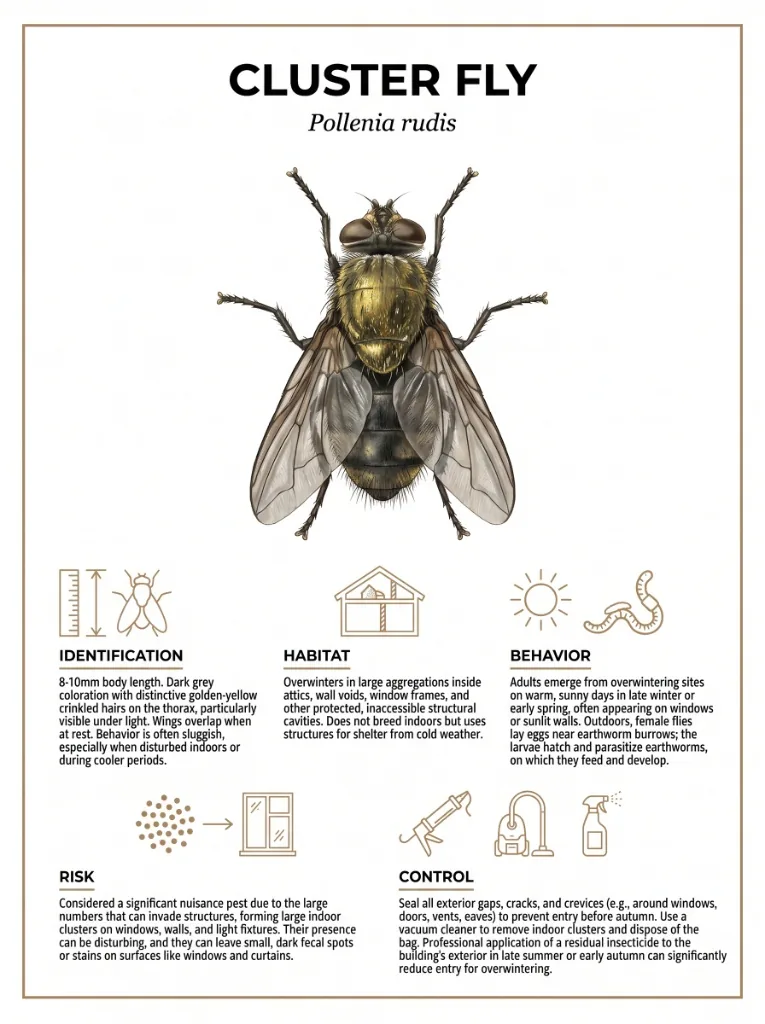
Cluster flies are larger and slower than house flies, with distinctive golden-yellow crinkled hairs on the thorax. They don't breed indoors — instead, large numbers overwinter inside attics, wall voids, and around window frames, emerging on warm winter days to crawl on sunny windows. They're a major nuisance pest, and their clusters can leave dark fecal spots on walls and curtains. Prevention is exterior sealing in late summer before they move in for the season.
Quick ID
8–10 mm dark grey body with golden-yellow crinkled thorax hairs; wings overlap at rest.
In the Triangle
Common in older Triangle homes with attics and rural / wooded properties.
Think you have cluster flys?
Free inspection from a licensed Castle Exterminators technician — Durham, Chapel Hill, Raleigh, Cary & the Triangle. We'll confirm the species and recommend a treatment plan.
Request Free Inspection (919) 606-8686