
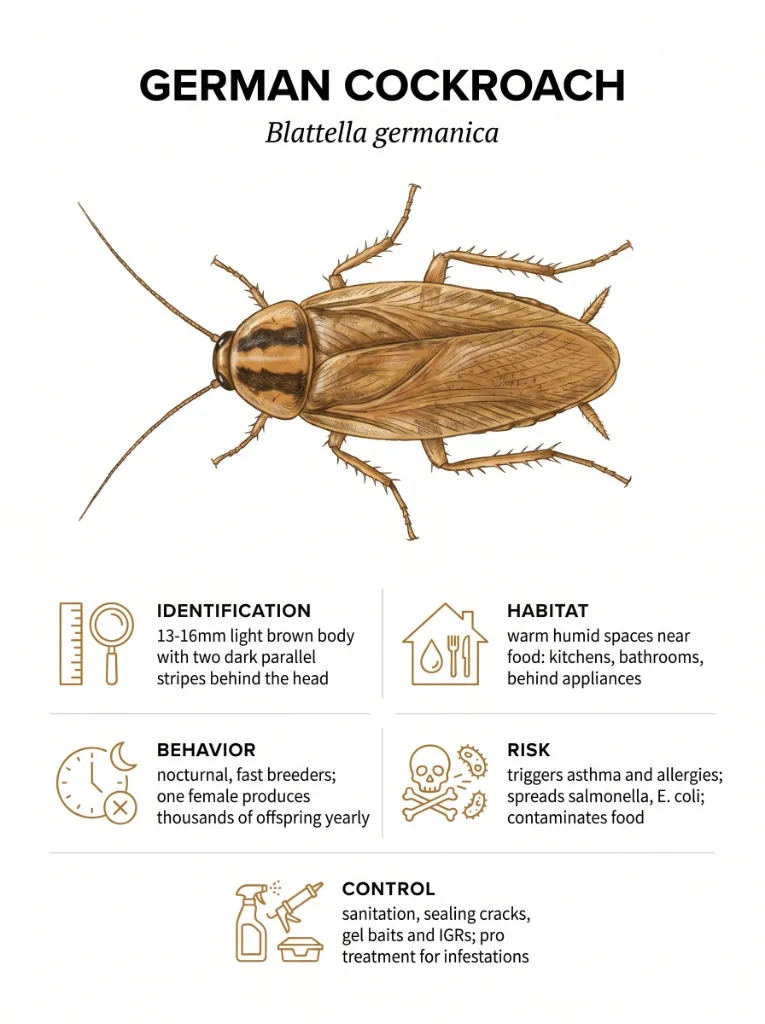
German Cockroach (Blattella germanica) identification infographic showing size, habitat, behavior, risk, and control
High concern

German Cockroach — Identification, Infestation & Control

Blattella germanica

Size
13–16 mm
Category
Cockroaches

About the german cockroach

The German cockroach (Blattella germanica) is by a wide margin the most problematic indoor cockroach in North Carolina — and one of the fastest-multiplying urban pests in the world. Adults are small, light brown, and marked with two dark parallel stripes running lengthwise behind the head. A single female carries an egg capsule producing thirty to forty offspring, and under Triangle indoor conditions a starter population can escalate into thousands within a season.

They are also a documented public-health issue. German cockroaches trigger asthma and allergy attacks, mechanically spread salmonella, E. coli, and other bacteria across kitchen surfaces, and contaminate stored food. This is a pest where over-the-counter sprays actively make things worse — they scatter the population and drive it deeper into walls. Professional gel baits, insect growth regulators, and a sanitation plan are the proven answer.

Quick ID

13–16 mm light brown body with two dark parallel stripes behind the head.

In the Triangle

Extremely common across the Triangle in apartments, rentals, restaurants, and any home with consistent humidity issues.

Think you have german cockroachs?

Free inspection from a licensed Castle Exterminators technician — Durham, Chapel Hill, Raleigh, Cary & the Triangle. We'll confirm the species and recommend a treatment plan.

Request Free Inspection (919) 606-8686
Biology & Reproductive Speed

What makes German cockroaches so hard to control is math. An adult female produces roughly four to six egg capsules (oothecae) in her lifetime; each capsule contains thirty to forty nymphs; nymphs mature in as little as six to eight weeks; and reproduction happens year-round in a climate-controlled home. That means a small unnoticed introduction — a stray roach on a grocery bag, a cardboard box from a warehouse — can become a full infestation before you have realized it started.

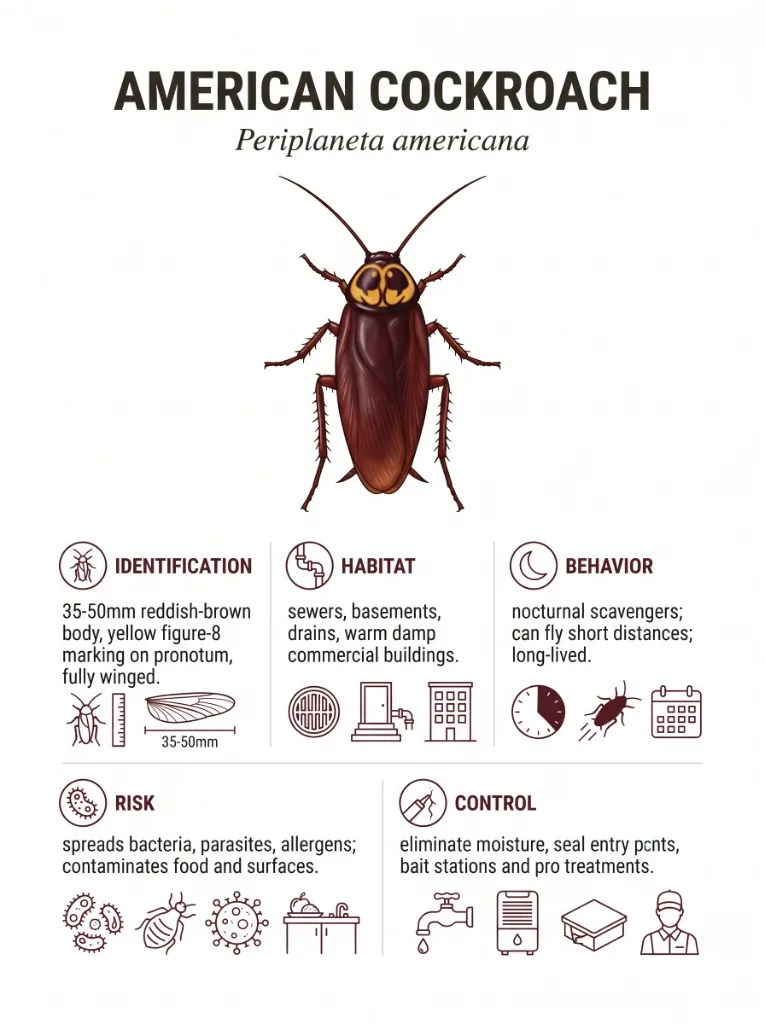
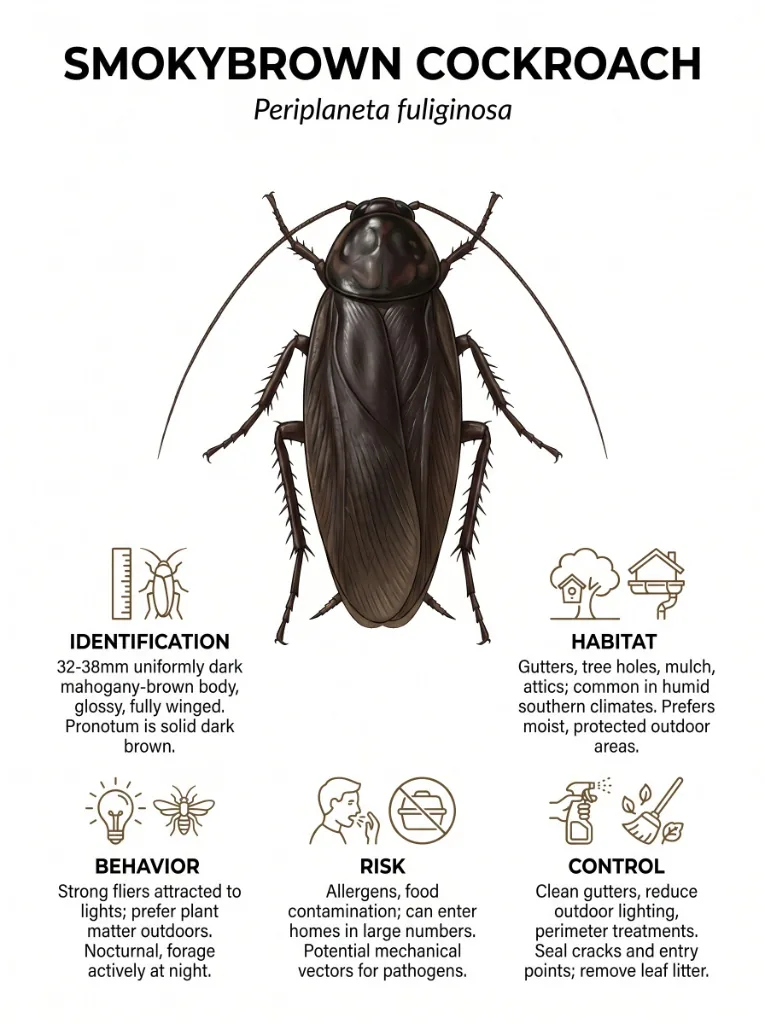
They are also strictly indoor. Unlike American or smokybrown cockroaches, German roaches almost never survive outdoors in North Carolina's winters. If you have them, they arrived on something you brought inside and stayed because your kitchen or bath gave them warmth, water, and food.

Signs of a German Cockroach Infestation

  • Small light-brown roaches under 16 mm running from light in the kitchen, especially near the fridge motor, dishwasher, or under the sink.
  • Egg capsules (oothecae) — small brown ridged capsules 6-9 mm long, often found in drawer corners, under counter lips, or behind appliances.
  • Fecal spotting — dark specks that look like ground pepper along the edges of shelves, inside cabinets, and behind hinges.
  • Musty, oily odor in heavy infestations.
  • Shed skins as nymphs mature.

If you are seeing roaches during the day — with the lights on — the population is already large. Nocturnal cockroaches out in daylight means the hiding harborage is overcrowded.

Health Risks You Should Take Seriously

The CDC and the American College of Allergy, Asthma & Immunology recognize cockroach allergens as a major asthma trigger, particularly in children. Proteins in cockroach saliva, droppings, and shed skins become airborne dust and cause allergic reactions and asthma exacerbation. German cockroaches mechanically carry salmonella, E. coli, staphylococcus, and other bacteria across food-preparation surfaces on their bodies and legs — cross-contaminating anything they walk across.

This is why treating a German cockroach infestation is not just a cosmetic concern. It's a health decision for anyone in the home, especially children, seniors, and anyone with asthma or a compromised immune system.

Why They Thrive in the Triangle

The Triangle has three conditions German cockroaches love: high indoor humidity from long humid summers, dense apartment and rental housing where a neighboring unit's infestation can migrate through shared walls and plumbing, and consistent year-round indoor temperatures that let breeding continue through winter. We see German cockroach calls concentrated in older Durham rentals, multifamily buildings, restaurants and their surrounding walls, student housing, and any home with an active humidity problem in the kitchen or bath.

If you live in an apartment or duplex and you are seeing them, your neighbor almost certainly has them too. Whole-building treatment is more effective than unit-by-unit.

Our Treatment & Prevention Approach

Effective German cockroach control and german cockroach extermination combines a professional-grade toolkit with a sanitation partnership from the homeowner — this is cockroach pest control done right, not a one-time spray. If you're comparing german roach pest control options, look for a licensed german cockroach exterminator who leads with baiting, not broadcast sprays:

  • Targeted gel baits placed in the exact harborage points — hinge crevices, motor housings, drawer runners — where roaches actually live. Baits are the workhorse; roaches feed, return to the harborage, and the active spreads.
  • Insect Growth Regulators (IGRs) that sterilize adults and prevent nymphs from reaching reproductive age — this breaks the cycle even for eggs that hatch later.
  • Precision dusts in wall voids, under appliances, and inside electrical boxes where liquids cannot go.
  • Follow-up visits on a two-to-four week cycle to ensure suppression and adjust bait placement as the population declines.
  • Sanitation guidance so we are not fighting a food supply we could have removed.

Every plan comes with a personalized quote based on how heavy the population is and how much of the home is affected.

Prevention & Sanitation Checklist

  • Wipe down counters and stove nightly; roaches feed on grease films you can barely see.
  • Fix dripping faucets and slow drains — roaches need water more than food.
  • Never leave pet food out overnight.
  • Break down and immediately remove cardboard boxes — they are both harborage and a common way roaches arrive.
  • Store dry goods (flour, cereal, pasta) in sealed hard containers, not original bags.
  • Inspect grocery bags, especially reusable ones, before bringing them inside.
  • Do not use off-the-shelf foggers or repellent sprays — they scatter the population deeper into walls.

Frequently asked

German Cockroach questions homeowners ask

Why did I suddenly get German cockroaches?
German cockroaches almost never migrate in from outdoors — they arrive on something you brought inside. Common vectors include used appliances, cardboard boxes from a warehouse, grocery bags, luggage from a trip, or shared walls and plumbing in an apartment. Once inside, warmth, water, and any food film lets them establish quickly.
Are German cockroaches dangerous?
Yes. They are one of the most-cited indoor asthma triggers by the CDC and mechanically carry salmonella, E. coli, and other bacteria across kitchen surfaces. This is a health-relevant pest, not just a cosmetic one — especially for children, seniors, and anyone with asthma.
Why do store-bought roach sprays make my problem worse?
Repellent sprays and foggers scatter the population — roaches flee into wall voids and neighboring rooms, where you cannot reach them and where they keep breeding. Gel baits and insect growth regulators used by licensed technicians work with the roaches' behavior, not against it, so the active gets carried back to the harborage.
How long does a German cockroach treatment take to fully work?
You should see a sharp drop in sightings within the first week to ten days. Full suppression usually takes several weeks because it has to include eggs hatching after the initial treatment. Follow-up visits every two to four weeks are the standard cycle until the population is confirmed eliminated.
Do I need to leave my home during treatment?
For most German cockroach treatments, no — we use targeted gel baits, IGRs, and precision dusts placed in the exact harborage points, not whole-room fogging. Any specific occupancy guidance for your treatment is discussed with your technician up front.

Related pests

More in cockroaches

Browse all pests