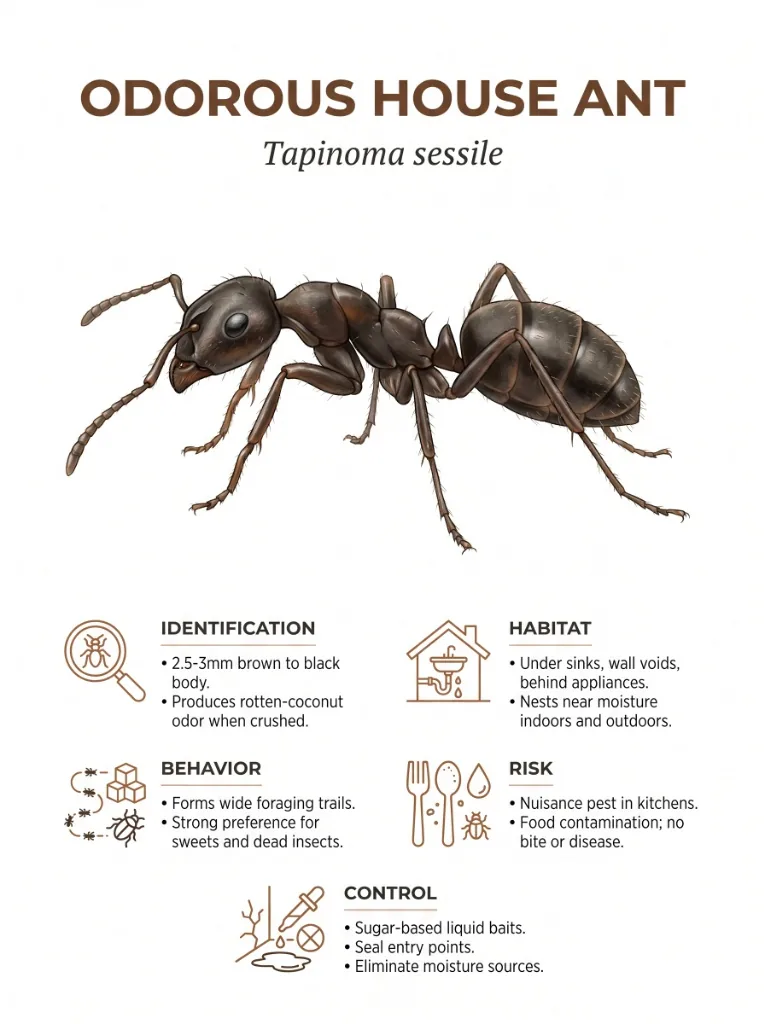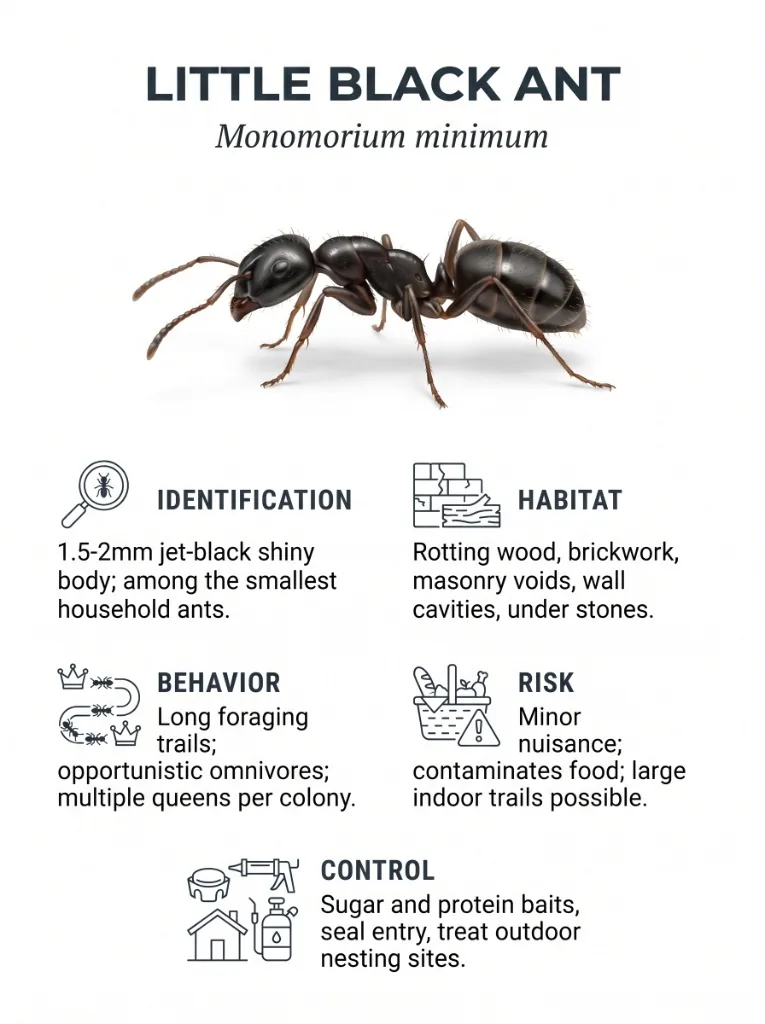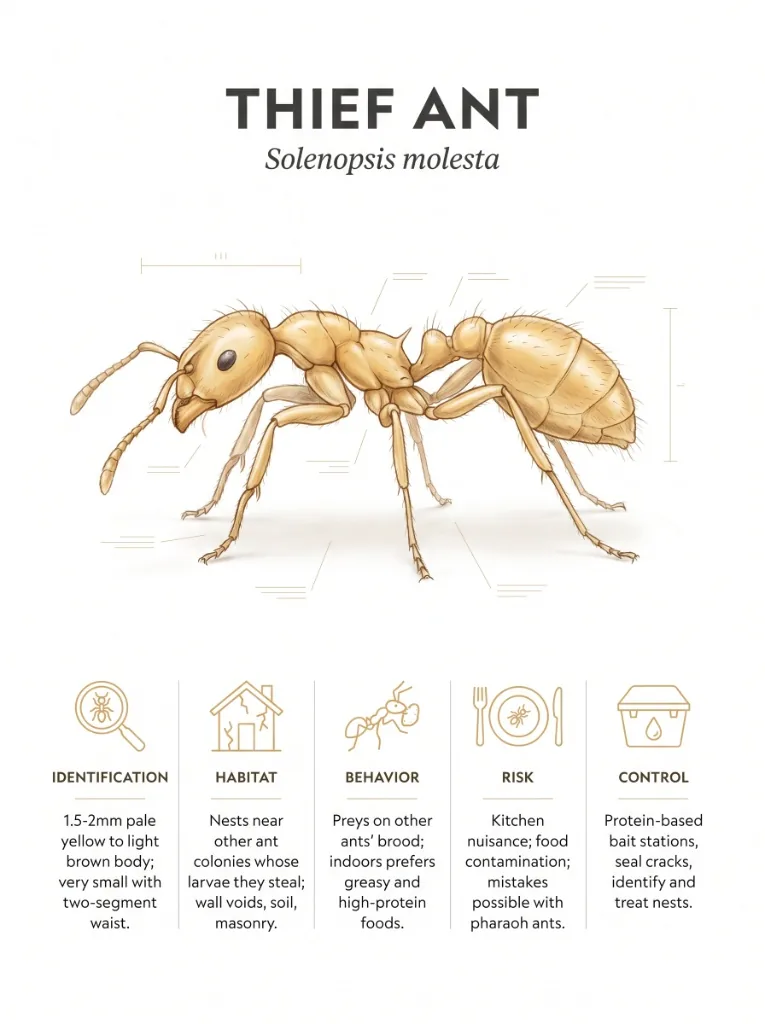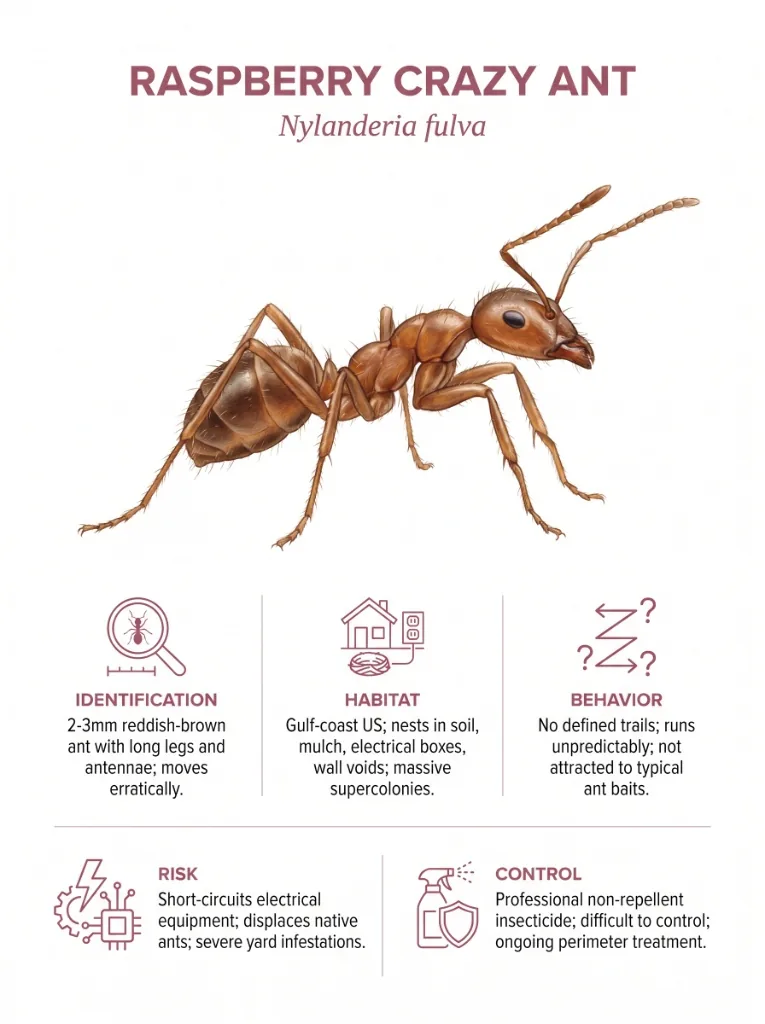
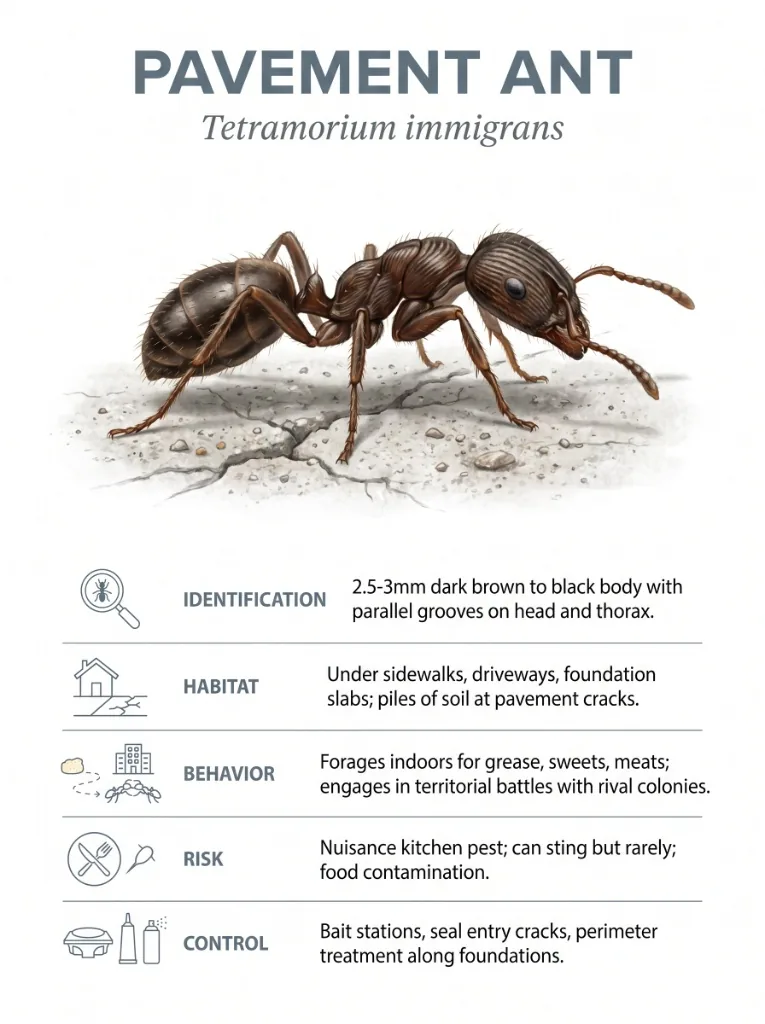
Pavement Ant (Tetramorium immigrans) identification infographic showing size, habitat, behavior, risk, and control
Low concern

Pavement Ant — Identification & Control

Tetramorium immigrans

Size
2.5–3 mm
Category
Ants

About the pavement ant

The pavement ant (Tetramorium immigrans) is the small brown-to-black ant everyone in the Triangle has seen swarming out of sidewalk cracks and driveway joints on warm days. Adults are 2.5-3 mm, dark brown to nearly black, with parallel grooves on the head and thorax that require a magnifier to see. They are one of the most consistently visible ants across residential NC — you can identify them by where they live long before you can identify them by anatomy.

Pavement ants are largely an outdoor nuisance that occasionally enters homes seeking food and moisture. They also engage in dramatic territorial battles between neighboring colonies — the swarms of black ants you sometimes see fighting on a driveway are pavement ants, and those battles can leave hundreds of dead workers on the pavement. Indoor pavement ant control is straightforward; outdoor perimeter control is the more common need.

Quick ID

2.5–3 mm dark brown to black body with parallel grooves on head and thorax.

In the Triangle

Extremely common in Triangle driveways and foundations; one of the top reasons homeowners call about ants on patios.

Think you have pavement ants?

Free inspection from a licensed Castle Exterminators technician — Durham, Chapel Hill, Raleigh, Cary & the Triangle. We'll confirm the species and recommend a treatment plan.

Request Free Inspection (919) 606-8686
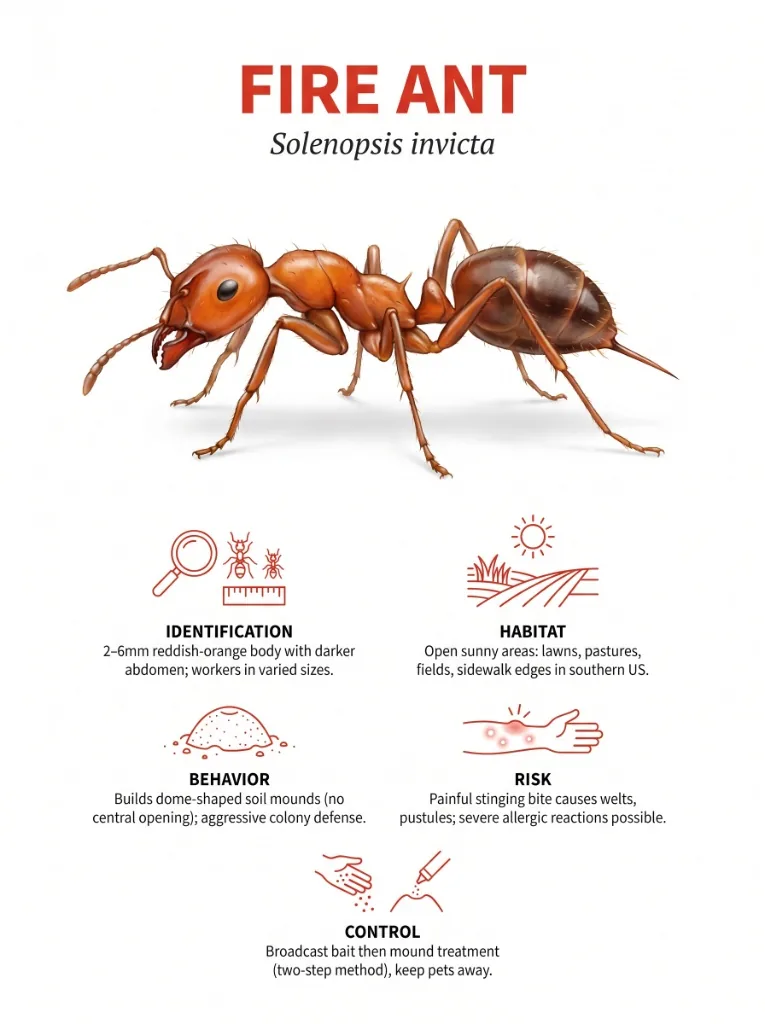
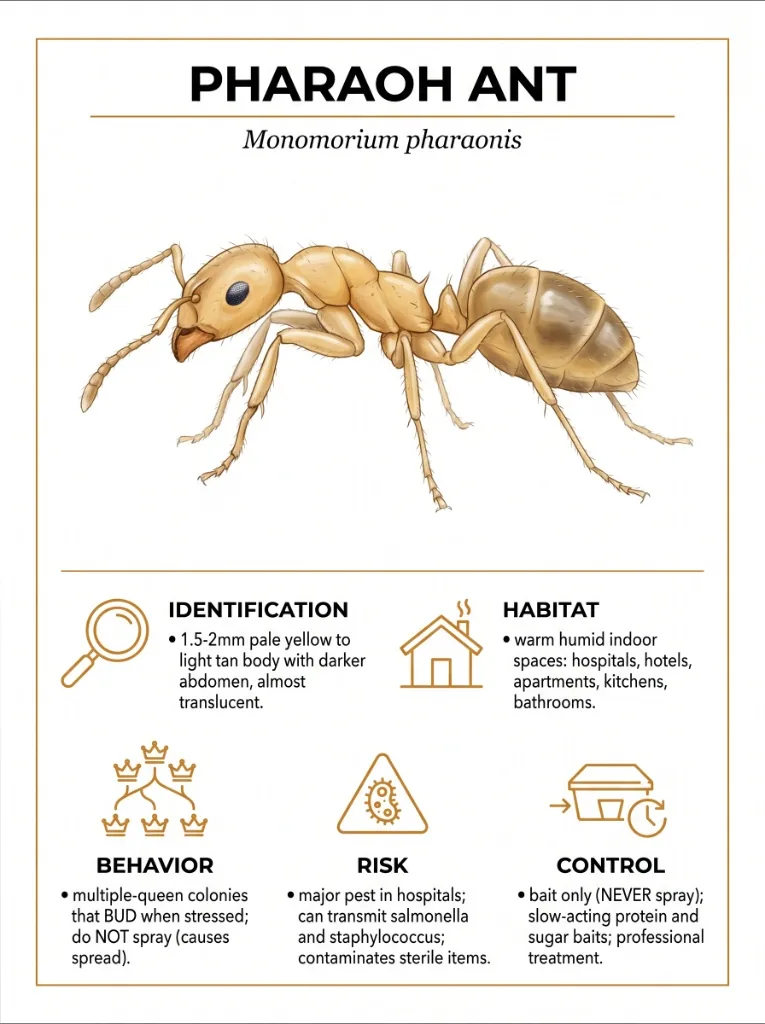
Identifying Pavement Ants

  • Size & color — 2.5-3 mm, dark brown to nearly black.
  • Body — two-node waist (distinguishes from odorous house ants and Argentine ants, which have one node).
  • Location — the strongest field ID. Pavement ants live in and around sidewalks, driveways, patio expansion joints, and slab foundations.
  • Small soil piles along sidewalk cracks and driveway joints — the excavation from their nest.
  • Aggressive intraspecific fights visible on pavement — hundreds of dead ants on a driveway after a colony boundary skirmish.

Biology & Colony Behavior

Pavement ant colonies contain 3,000 to 30,000 workers with a single queen. They nest under and along concrete slabs, sidewalks, driveways, patios, and stone landscape features — anywhere warm sun-heated surface meets soil. Colonies are strongly territorial with neighboring pavement ant colonies, which is why the mass battles are so common in spring and fall when colonies reassert territory.

Because pavement ants nest so consistently under hardscape, treatment approach is different from soil-nesting or wall-void ants. Broadcast baits and perimeter residuals along the concrete edges reach where they live.

When and How They Enter Homes

Pavement ants enter homes primarily during two periods: early spring when workers first re-emerge and seek food, and mid-summer during hot dry stretches when they seek moisture. Common entry paths:

  • Along the concrete-to-siding joint where garages or foundations meet slabs.
  • Through cracks in slab foundations from below.
  • Through weep holes in brick veneer.
  • Under exterior doors, especially garage service doors.
  • Along utility line penetrations at grade level.

Indoors, they typically trail across kitchen floors, along baseboards, and to pet food or spill residue.

Our Treatment Approach

  • Perimeter treatments along concrete edges — sidewalks, driveway, patio, foundation slab.
  • Granular baits broadcast along outdoor trails and around slab edges — workers carry the active back to the colony under the concrete.
  • Interior crack-and-crevice treatments where they are entering.
  • Direct treatment into expansion joints and slab cracks where colonies concentrate.
  • Ongoing perimeter service for chronic-pressure properties.

Because pavement ants nest under hardscape you cannot dig up, ongoing perimeter service is a normal recommendation for properties with heavy pavement ant pressure. Every plan is scoped with a personalized quote.

Prevention Tips

  • Seal cracks in driveways, sidewalks, and patios — pavement ants use them as both entry and nest expansion.
  • Caulk the concrete-to-siding joint at the base of garages and slab foundations.
  • Fix worn garage-door corner seals.
  • Do not leave pet food out; sweep kitchen floors nightly.
  • Keep vegetation and mulch pulled back from concrete edges.
  • Repair irrigation leaks and downspout runoff that provides steady moisture along slab edges.

Frequently asked

Pavement Ant questions homeowners ask

Why are hundreds of dead ants on my driveway?
That is almost certainly a pavement ant territorial battle. Neighboring pavement ant colonies fight each other for territory in spring and fall, and the casualties are often striking — hundreds of dead ants across the concrete. Cosmetically off-putting, but the ants themselves are not dangerous.
Are pavement ants harmful?
Not medically. They can bite if handled but do not sting meaningfully. The concerns are indoor nuisance and kitchen contamination if they establish trails to food. Structurally, they cause no damage.
Can I get rid of them just by sealing the cracks?
Sealing cracks reduces new entry, but existing colonies under the concrete slab are not eliminated by sealing. Effective control combines exterior baits + perimeter residuals + crack sealing. Any one of those alone gives partial results.
Do I need ongoing service?
For properties with heavy pavement ant pressure — long driveways, big patios, older sidewalks — ongoing quarterly perimeter service is often the practical answer, because colonies under concrete are not permanently eliminated by a single treatment.
Will they damage my concrete?
Not meaningfully. Small piles of excavated soil at nest entrances are cosmetic, not structural. Pavement ants exploit existing cracks; they do not create them.

Related pests

More in ants

Browse all pests