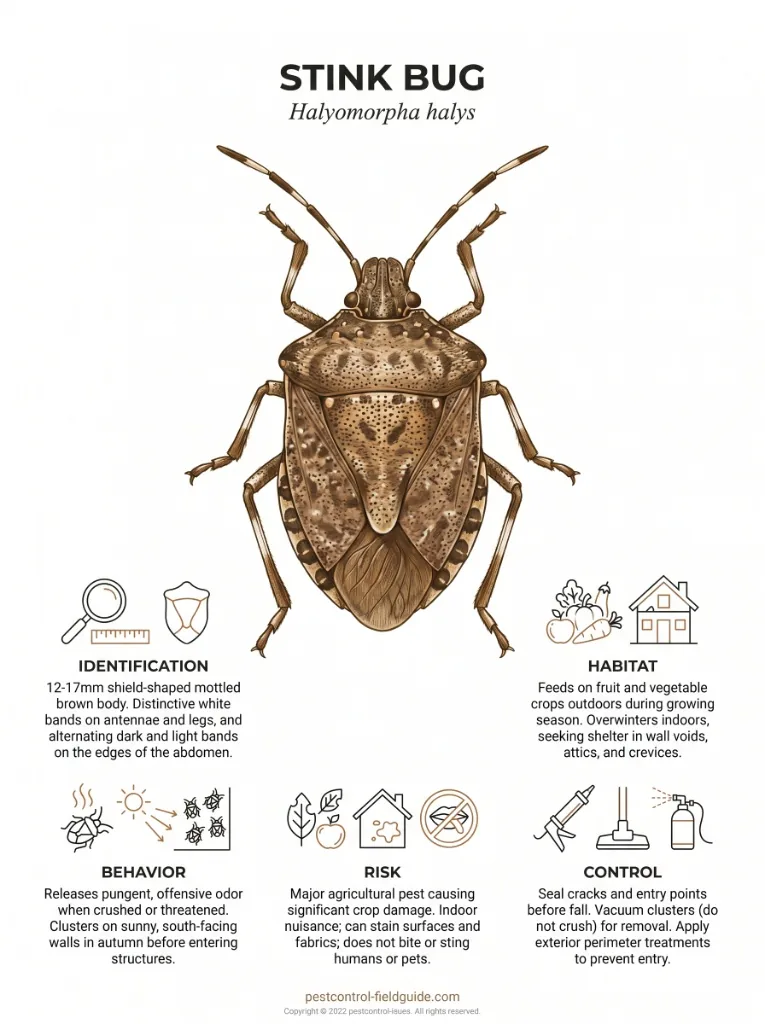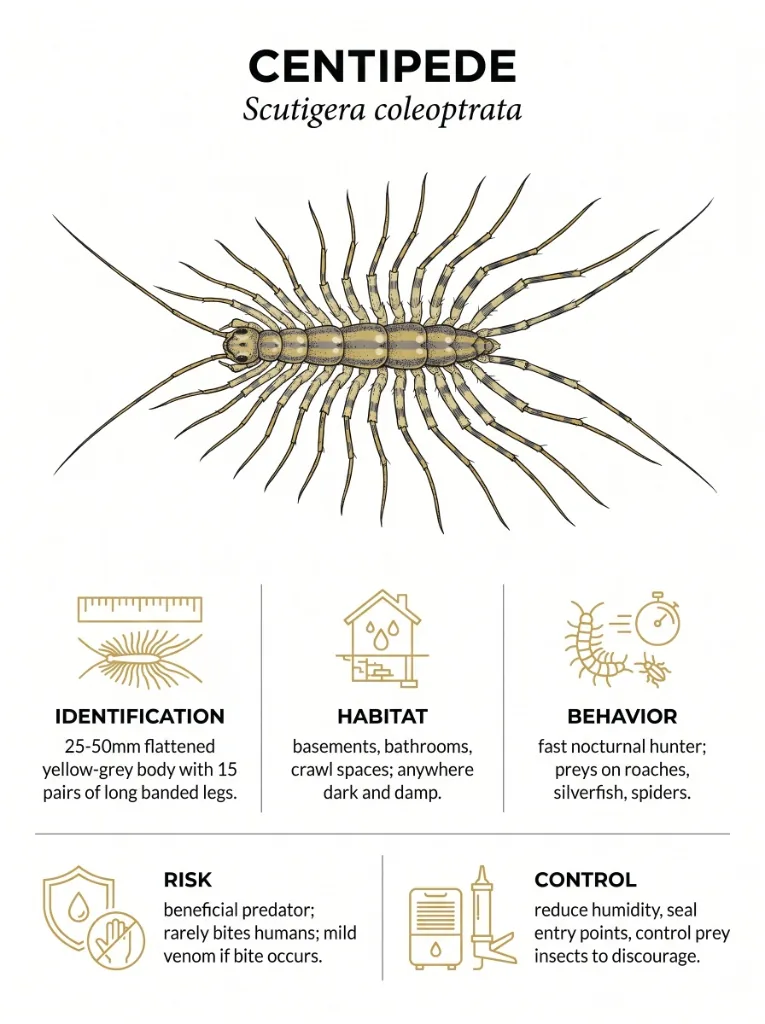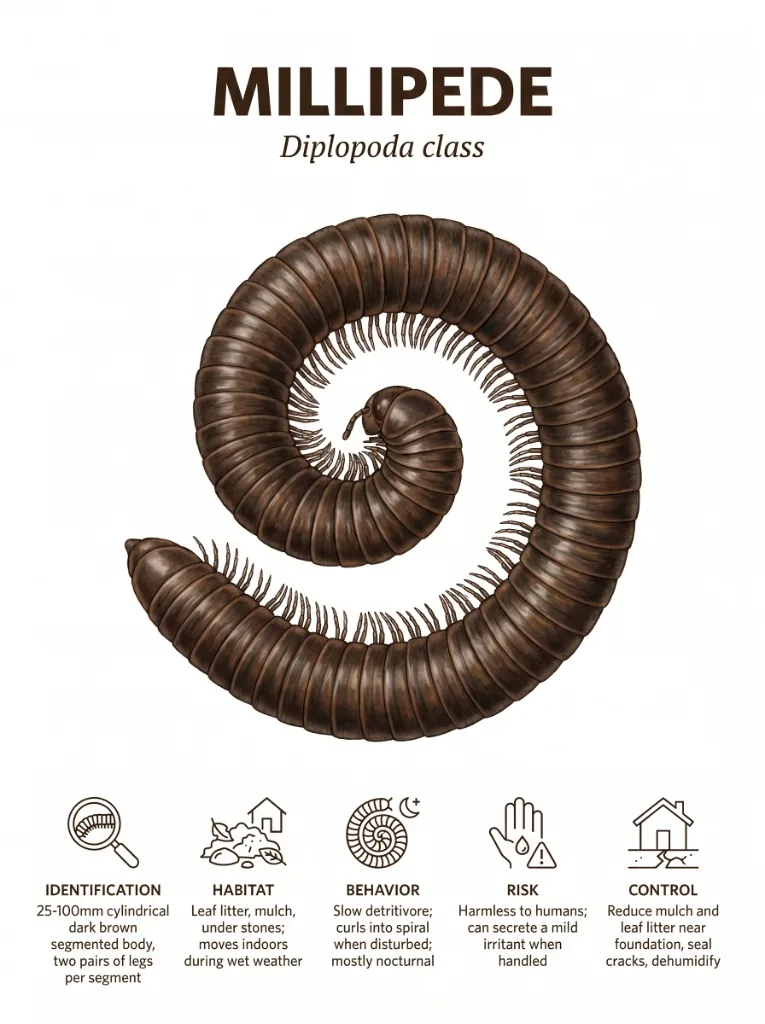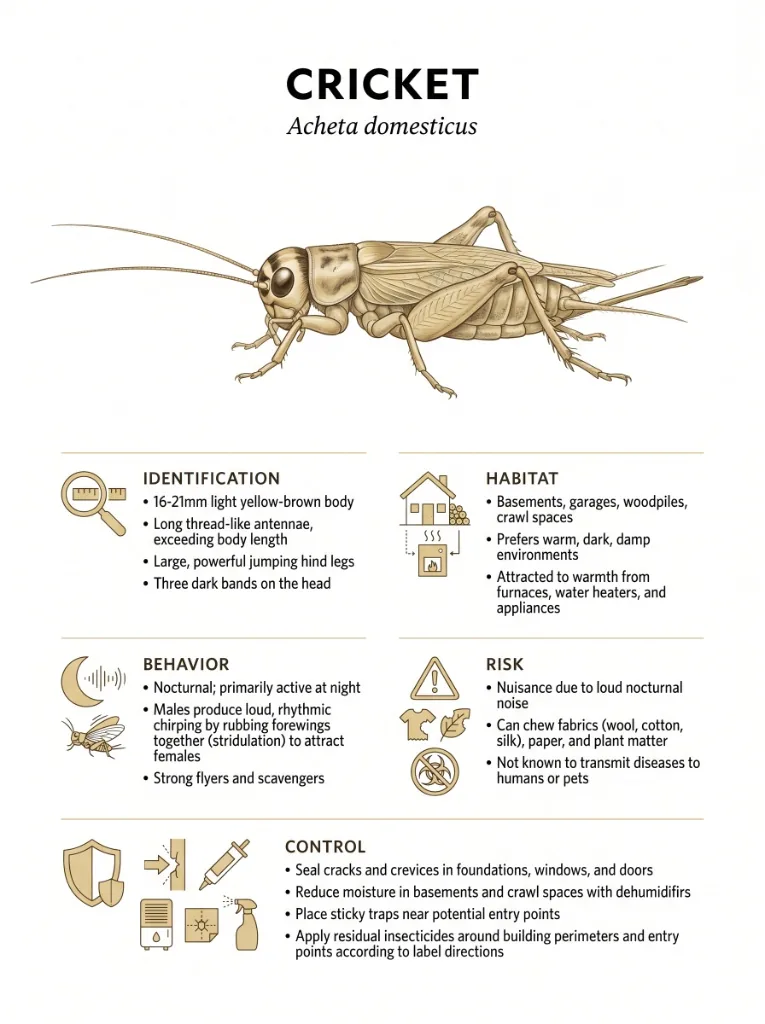
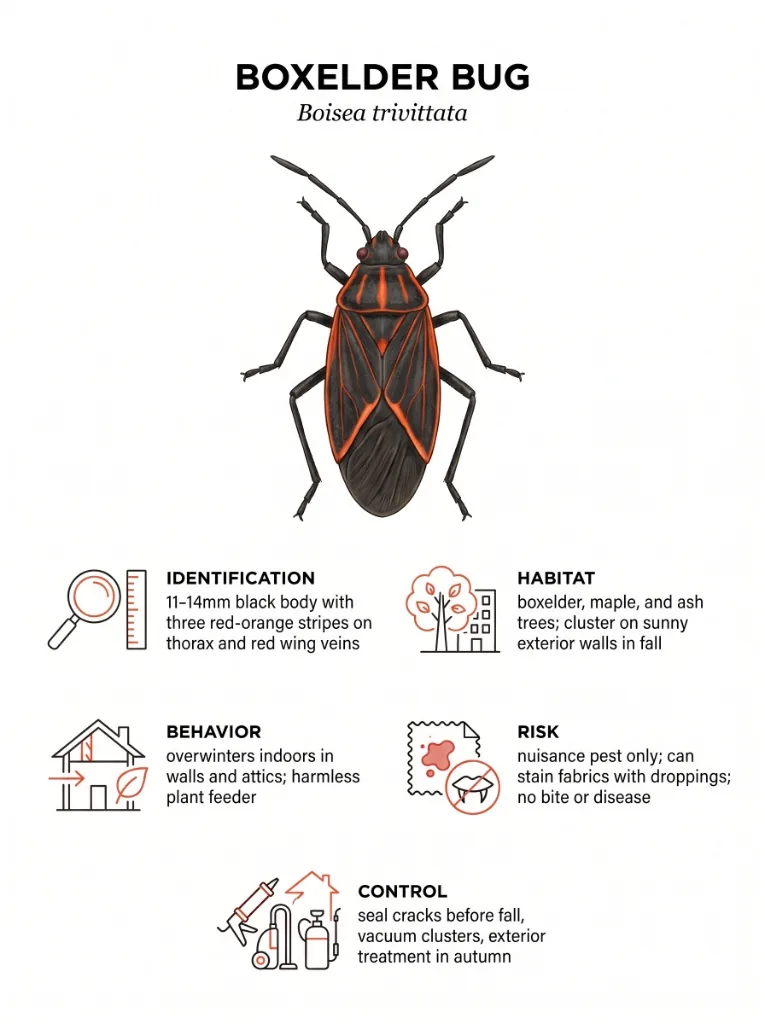
Boxelder Bug (Boisea trivittata) identification infographic showing size, habitat, behavior, risk, and control
Low concern

Boxelder Bug — Identification & Control

Boisea trivittata

Size
11–14 mm
Category
Occasional Invaders

About the boxelder bug

Boxelder bugs are easy to recognize once you have seen them: flat, elongated black bugs about half an inch long, with three distinctive red-orange stripes running down the thorax and red veining through otherwise dark wings. They feed exclusively on boxelder, silver maple, and ash trees, sipping sap from leaves, seeds, and twigs — a completely harmless habit for the tree and one that causes no structural damage to a home.

The problem is purely behavioral. As temperatures drop in fall, boxelder bugs congregate by the dozens or hundreds on sun-warmed exterior walls, especially south- and west-facing sides of a house near a host tree, searching for cracks and gaps to slip inside and overwinter in wall voids, attics, and window frames. Once inside, they do not reproduce or feed, but a few will emerge on warm winter days, and crushing them can stain fabric or curtains with a reddish secretion.

Quick ID

11–14 mm black body with three red-orange stripes on thorax and red wing veins.

In the Triangle

A predictable fall nuisance across Triangle neighborhoods with boxelder and maple trees.

Think you have boxelder bugs?

Free inspection from a licensed Castle Exterminators technician — Durham, Chapel Hill, Raleigh, Cary & the Triangle. We'll confirm the species and recommend a treatment plan.

Request Free Inspection (919) 606-8686
Why Boxelder Bugs Cluster on Your Walls

Boxelder bugs are drawn to warmth and light-colored, sun-exposed surfaces in fall — this is their instinctive search for an overwintering site before cold weather sets in. A large female boxelder or silver maple tree nearby dramatically increases the population you will see, since the tree is both the food source and the staging ground for the fall migration toward your walls.

Boxelder Bug Prevention & Control

Because indoor boxelder bugs cannot reproduce, the goal is exclusion, not eradication of a population inside your home. Seal cracks around window frames, siding, utility penetrations, and the foundation before fall arrives — this is the single most effective long-term step. A perimeter treatment applied in late summer, before bugs begin migrating toward the house, knocks down numbers before they reach your walls. For bugs that do make it inside, a vacuum (not a crushing swat) removes clusters without staining.

Frequently asked

Boxelder Bug questions homeowners ask

Do boxelder bugs damage my home or bite people?
No. Boxelder bugs do not bite, sting, transmit disease, or damage wood, wiring, or structure. They are strictly a nuisance pest, and the only real cost is the annoyance of large clusters and occasional staining if crushed.
Will removing my boxelder or maple tree stop the problem?
It would remove the primary local food source and often reduces numbers significantly, but boxelder bugs can fly in from neighboring properties, so sealing entry points is usually a more practical first step than tree removal.

Related pests

More in occasional invaders

Browse all pests