Earwig
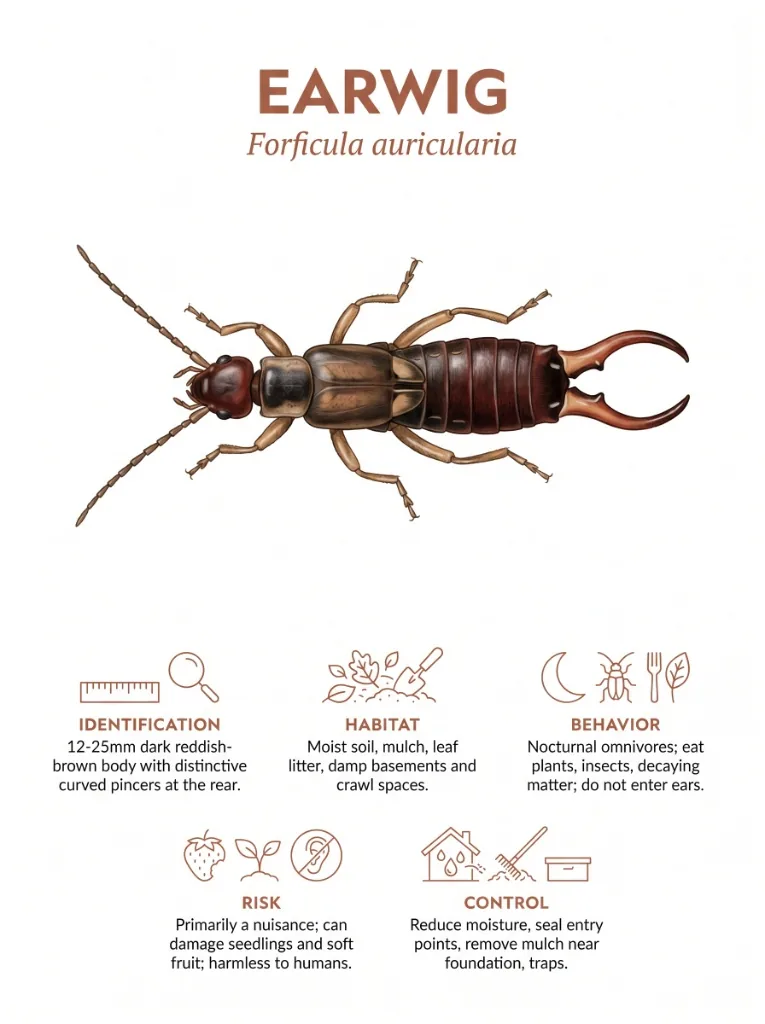
Forficula auricularia
About the earwig
Earwigs are the small dark reddish-brown insects with the distinctive curved pincers (cerci) at their rear. Despite the old folk legend, they do NOT crawl into ears — that's pure myth. They're nocturnal omnivores that eat plants, insects, and decaying matter, and they can damage seedlings and soft fruit in gardens. Indoors they're a nuisance only. Reducing moisture and mulch right against the foundation, plus sealing entry points, keeps them outside where they belong.
Quick ID
12–25 mm dark reddish-brown body with distinctive curved pincers at the rear.
In the Triangle
Very common in Triangle mulch beds, basements, and crawl spaces during wet weather.
Think you have earwigs?
Free inspection from a licensed Castle Exterminators technician — Durham, Chapel Hill, Raleigh, Cary & the Triangle. We'll confirm the species and recommend a treatment plan.
Request Free Inspection (919) 606-8686