House Centipede
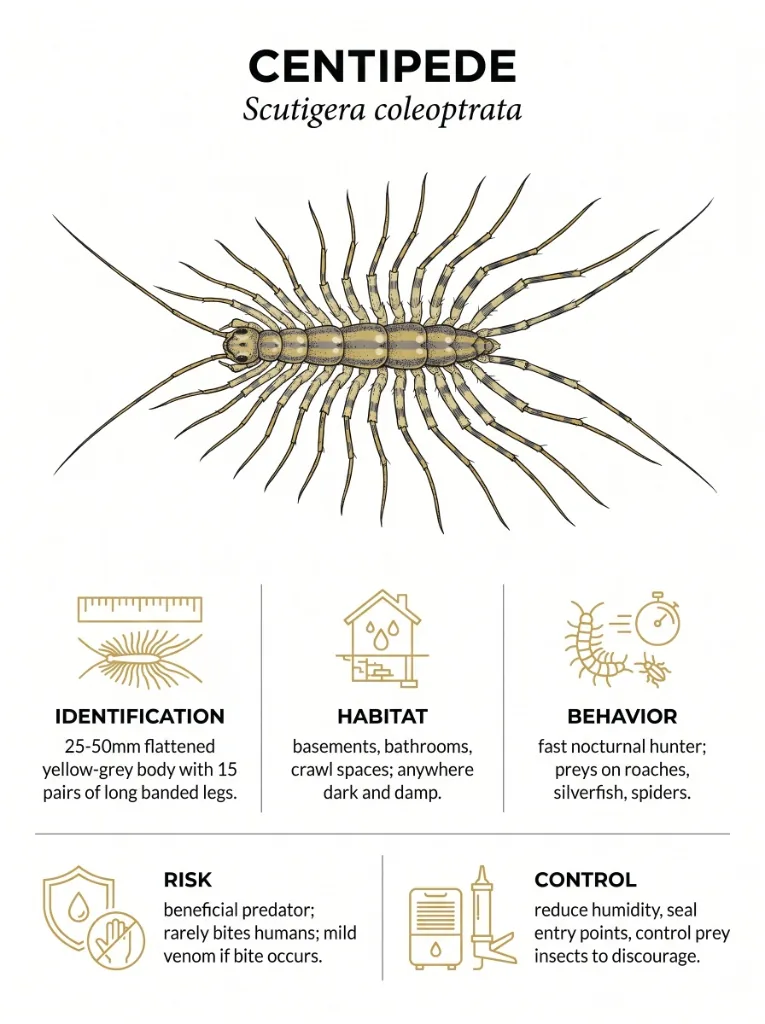
Scutigera coleoptrata
About the house centipede
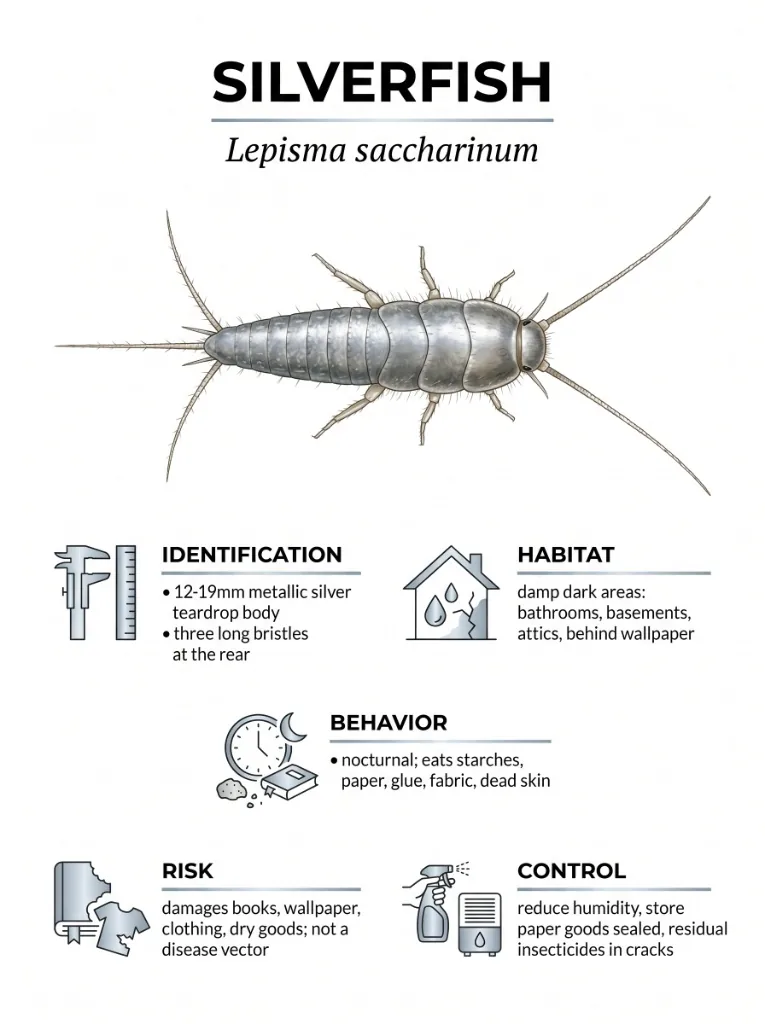
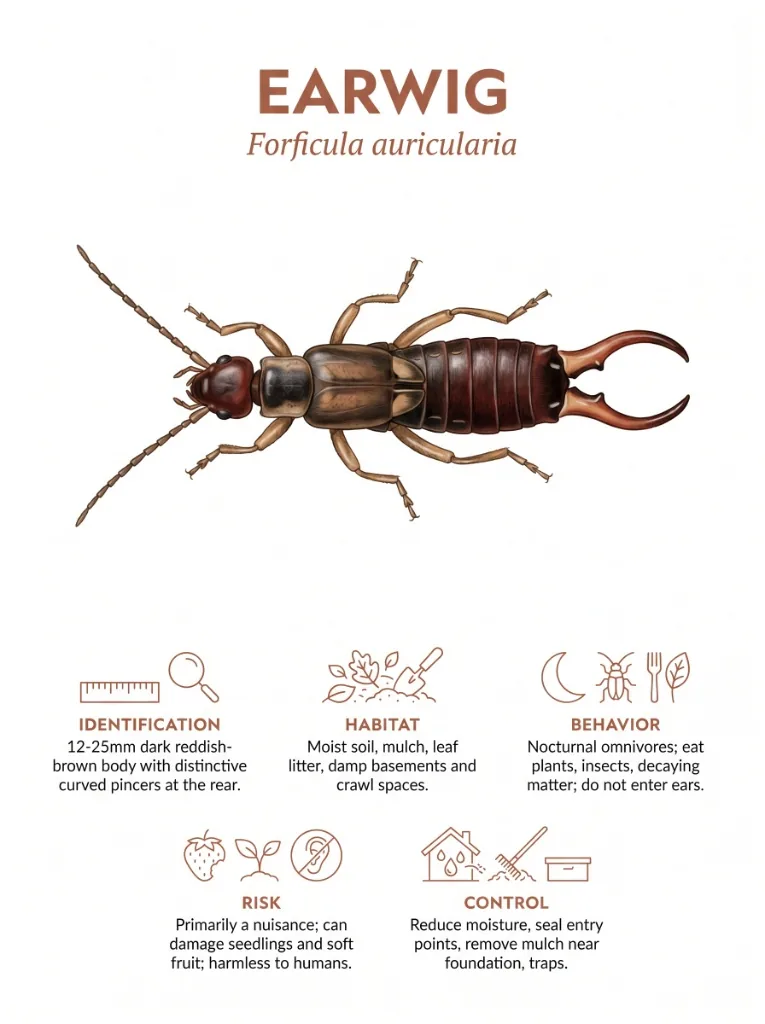
House centipedes are the unsettling fast-moving yellow-grey arthropods with 15 pairs of long banded legs that you sometimes find in basements and bathrooms. As alarming as they look, they're actually beneficial predators that hunt roaches, silverfish, and spiders. They rarely bite humans, and if they do, the venom is mild. The real fix is reducing the prey they're chasing: control humidity, seal cracks, and treat the underlying pest population.
Quick ID
25–50 mm flattened yellow-grey body with 15 pairs of long banded legs.
In the Triangle
Common in Triangle basements, crawl spaces, and damp bathrooms.
Think you have house centipedes?
Free inspection from a licensed Castle Exterminators technician — Durham, Chapel Hill, Raleigh, Cary & the Triangle. We'll confirm the species and recommend a treatment plan.
Request Free Inspection (919) 606-8686