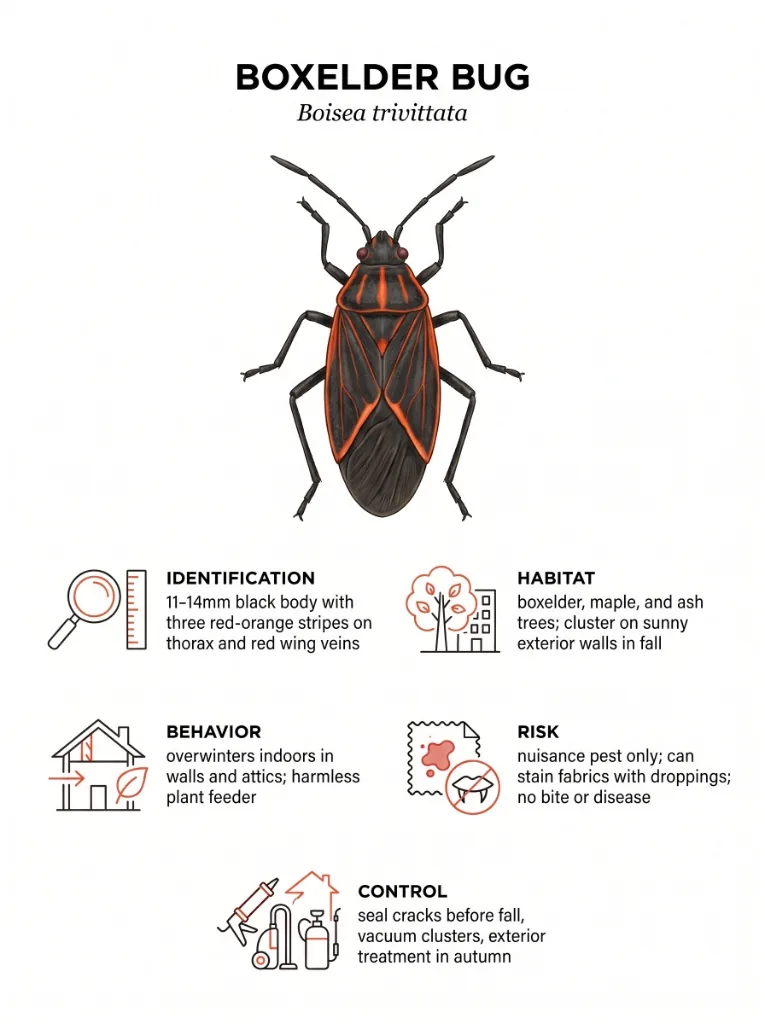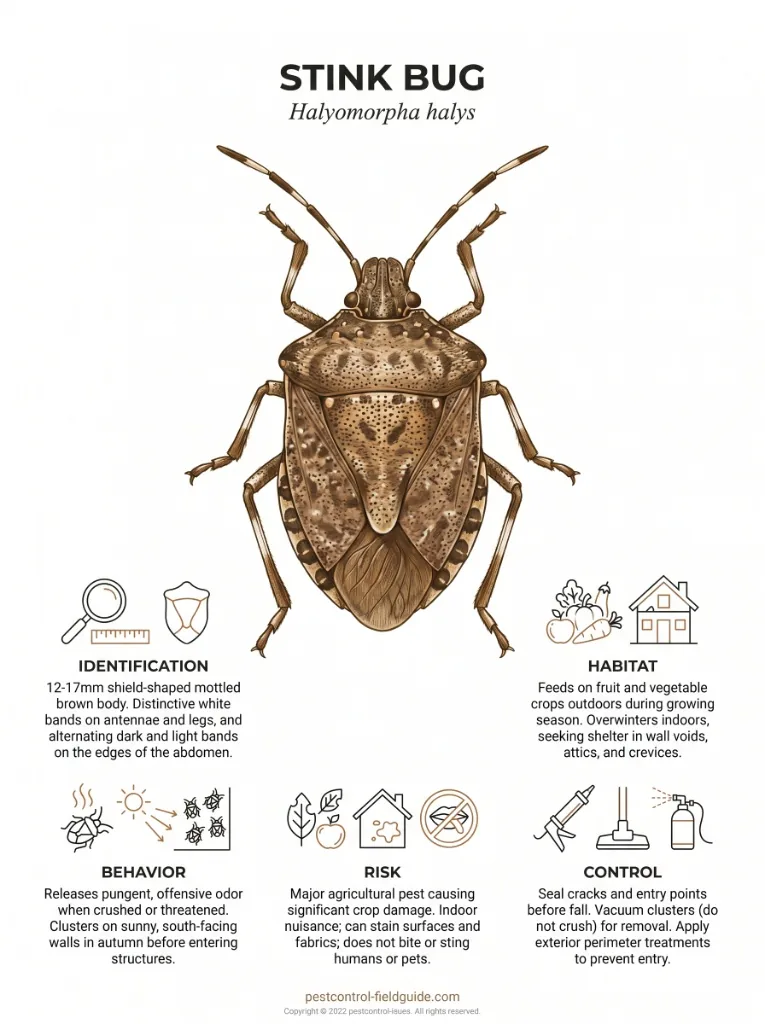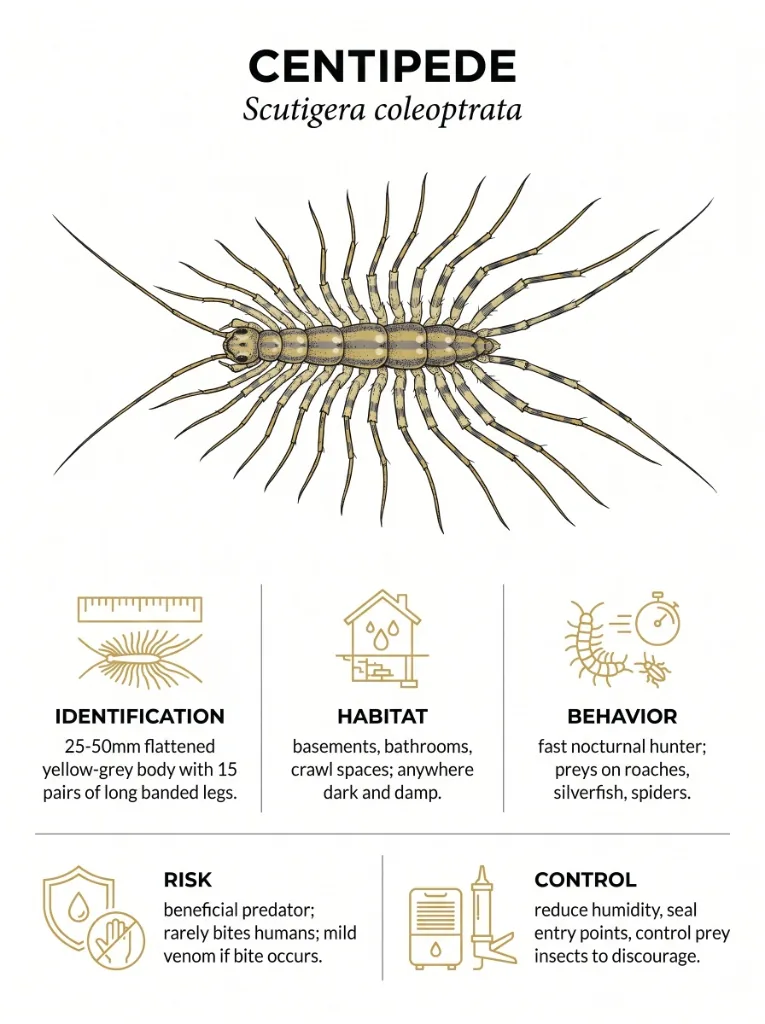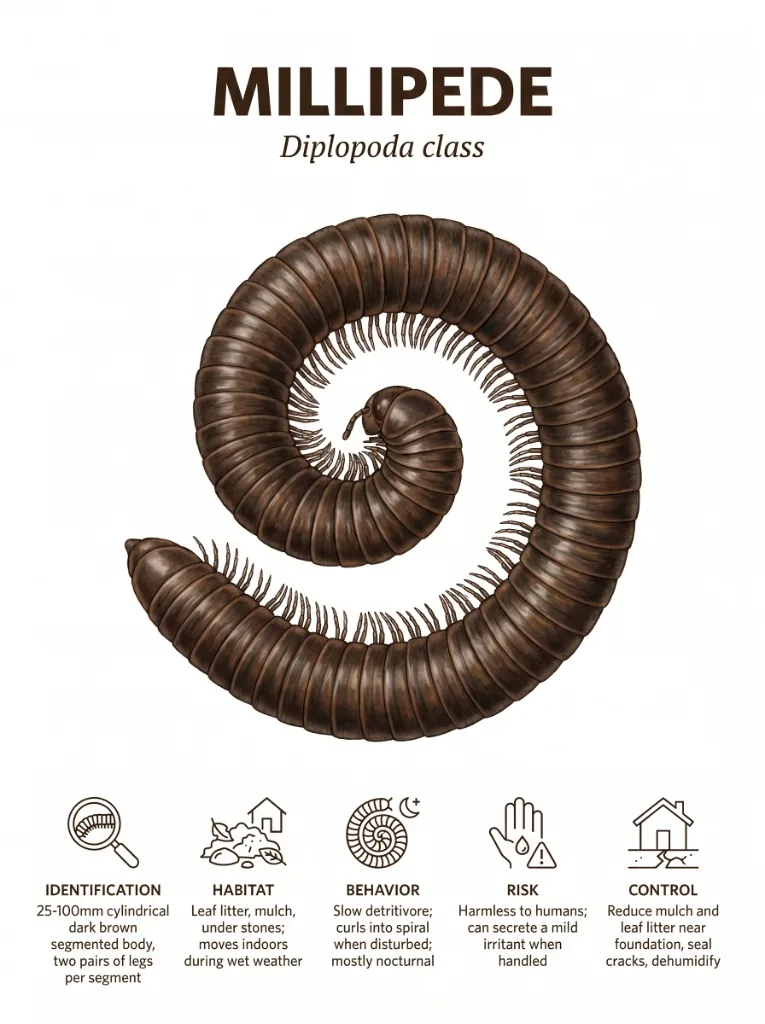
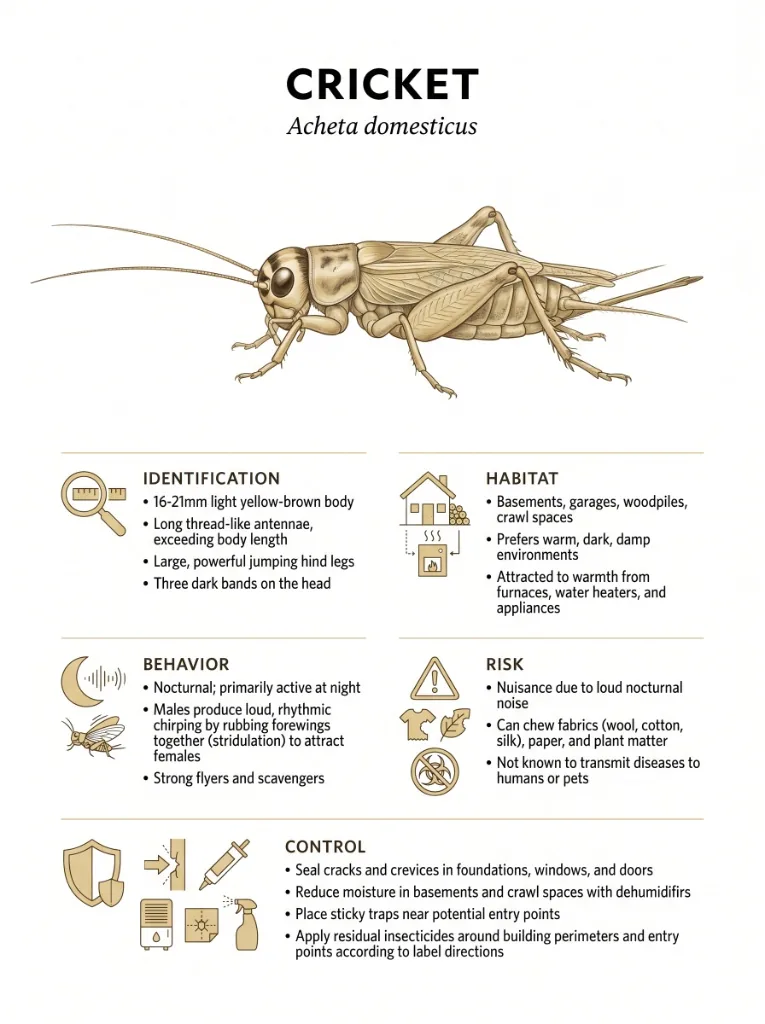
House Cricket (Acheta domesticus) identification infographic showing size, habitat, behavior, risk, and control
Low concern

House Cricket — Identification & Control

Acheta domesticus

Size
16–21 mm
Category
Occasional Invaders

About the house cricket

House crickets are light yellow-brown insects best known for the rhythmic chirping males produce by rubbing specialized ridges on their forewings together — a mating call that can become a genuine nuisance once a cricket gets inside a bedroom or living space at night. They are strong jumpers with long, thread-like antennae and large hind legs, and they move indoors most often during cooler weather in search of warmth.

Once inside, house crickets gravitate toward warm mechanical areas — furnace rooms, water heater closets, and around major appliances — and they will chew on wool, cotton, silk, paper, and stored plant material if food is scarce, though damage is rarely severe. They do not bite people or spread disease; the main complaint is almost always the noise, particularly in a quiet bedroom at night.

Quick ID

16–21 mm light yellow-brown body with long thread-like antennae, large jumping hind legs, and three dark bands on the head.

In the Triangle

Common indoor invader across the Triangle in late summer and fall as nights cool off.

Think you have house crickets?

Free inspection from a licensed Castle Exterminators technician — Durham, Chapel Hill, Raleigh, Cary & the Triangle. We'll confirm the species and recommend a treatment plan.

Request Free Inspection (919) 606-8686
Why House Crickets Move Indoors

Falling nighttime temperatures in late summer and fall push crickets to seek shelter, and gaps around foundations, utility penetrations, and door thresholds give them easy access. Once inside, warm, dark mechanical spaces near furnaces and water heaters offer the stable temperature they prefer, which is why crickets often concentrate in basements and utility closets rather than living areas — though a single cricket chirping at 2am can feel like an infestation regardless of total numbers.

Getting Rid of House Crickets

Sealing exterior cracks and gaps around the foundation, utility lines, and door and window frames is the most effective long-term fix, since it blocks the entry routes crickets use to move indoors in the first place. Reducing basement and crawl space humidity discourages crickets along with several other occasional invaders that share the same preferences. Sticky traps placed along baseboards near suspected entry points catch crickets already inside, and an exterior perimeter treatment before the fall movement begins reduces pressure for homes with a recurring problem.

Frequently asked

House Cricket questions homeowners ask

Why is a single cricket in my house such a problem?
House cricket chirping is surprisingly loud for a single insect and often happens at night, which is why even one cricket can disrupt sleep and prompt a call — the actual infestation risk from one individual is minimal.
Do house crickets damage clothing like moths do?
They can chew wool, cotton, silk, and paper if other food is scarce, but damage from crickets is far less common and less severe than clothes moth or carpet beetle damage, and is rarely the primary concern.

Related pests

More in occasional invaders

Browse all pests