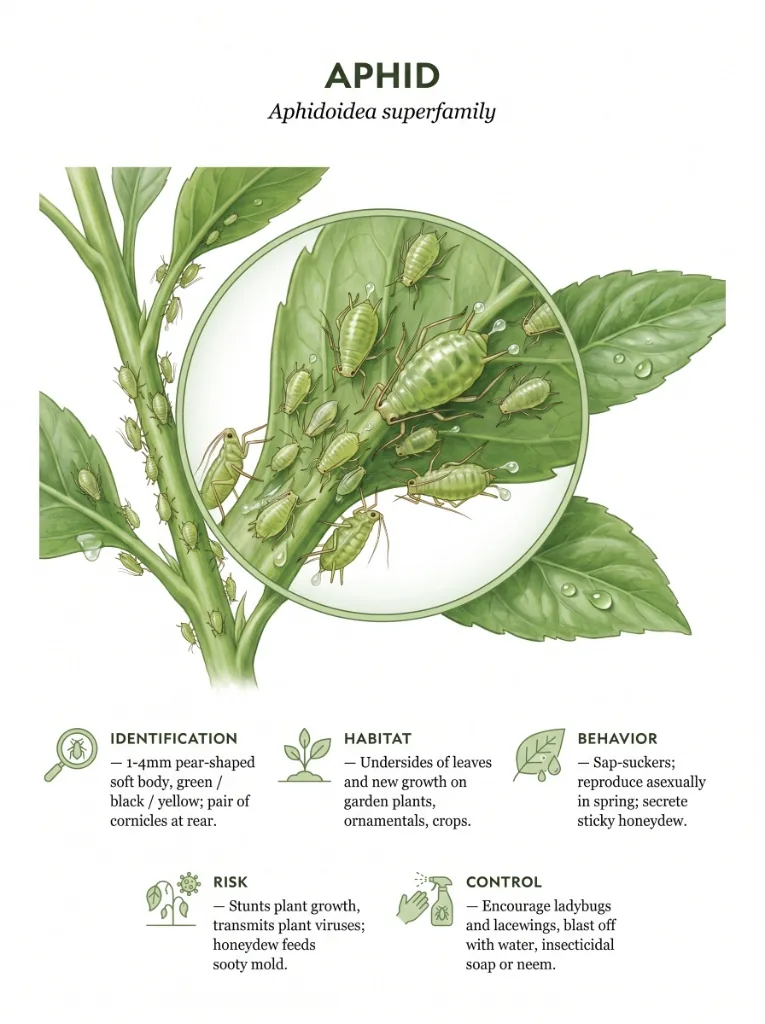
Aphid (Aphidoidea superfamily) identification infographic showing size, habitat, behavior, risk, and control
Low concern

Aphid — Identification & Control

Aphidoidea superfamily

Size
1–4 mm
Category
Garden & Outdoor

About the aphid

Aphids are among the most common insects any Triangle gardener will meet, and also one of the fastest-reproducing. A single female can start producing offspring without mating at all (parthenogenesis), and many species give birth to live nymphs rather than laying eggs — which is why a few aphids on a rose bush in April can become a dense colony covering every new shoot by May. They cluster on tender new growth and the undersides of leaves, piercing plant tissue with needle-like mouthparts and withdrawing sap.

The direct damage — curled or yellowing leaves, stunted new growth — is usually secondary to two bigger problems: the sticky honeydew aphids excrete grows black sooty mold on leaves and patio furniture below, and dense aphid colonies attract ants that farm them (protecting the aphids from predators in exchange for the honeydew). Some species also transmit plant viruses between susceptible crops. None of this threatens your home structurally, but a heavy infestation can set back vegetable gardens and ornamentals for a full season.

Quick ID

1–4 mm pear-shaped soft body in green, black, or yellow; a pair of cornicles (small tubes) at the rear.

In the Triangle

Universal Triangle garden pest from spring through fall.

Think you have aphids?

Free inspection from a licensed Castle Exterminators technician — Durham, Chapel Hill, Raleigh, Cary & the Triangle. We'll confirm the species and recommend a treatment plan.

Request Free Inspection (919) 606-8686
Identifying an Aphid Problem Early

Check the undersides of new leaves and the tips of stems first — that is where aphids concentrate. Early signs include a faint stickiness on leaves (honeydew), curling or puckering new growth, and ants traveling up and down the stem in unusual numbers. Color varies by species and even by generation on the same plant: green, black, grey, and yellow aphids are all common in Triangle gardens.

Because colonies grow exponentially, the earlier you catch them the easier control is. A garden checked weekly during spring growth flushes rarely needs anything beyond a strong water spray; a garden checked monthly can go from a few aphids to a full honeydew problem in that window.

Aphid Control Options

Light infestations respond well to a firm blast of water from the hose every few days, which knocks the soft-bodied insects off the plant faster than they can climb back on. Insecticidal soap and horticultural oil are effective, low-impact options for moderate populations, and both break down quickly without harming beneficial insects if applied correctly.

Ladybugs, lacewings, and parasitic wasps are natural aphid predators already present in most Triangle yards — avoiding broad-spectrum insecticides preserves them and often keeps aphid numbers in check on its own. For persistent or garden-wide outbreaks, especially on food crops, we can recommend a treatment plan that targets the aphids while protecting pollinators and beneficial insects.

Frequently asked

Aphid questions homeowners ask

Do aphids spread to my house or just stay in the garden?
Aphids feed exclusively on living plant tissue and have no interest in your home's structure or food supply. They stay outdoors on host plants and are strictly a garden and landscaping concern, not an indoor pest.
Why do I keep seeing ants near my aphid-infested plants?
Many ant species farm aphids deliberately, protecting the colony from predators like ladybugs in exchange for the sugary honeydew aphids excrete. Seeing ants climbing a plant is often the fastest visual sign of an aphid colony above.

Related pests

More in garden & outdoor

Browse all pests