Low concern
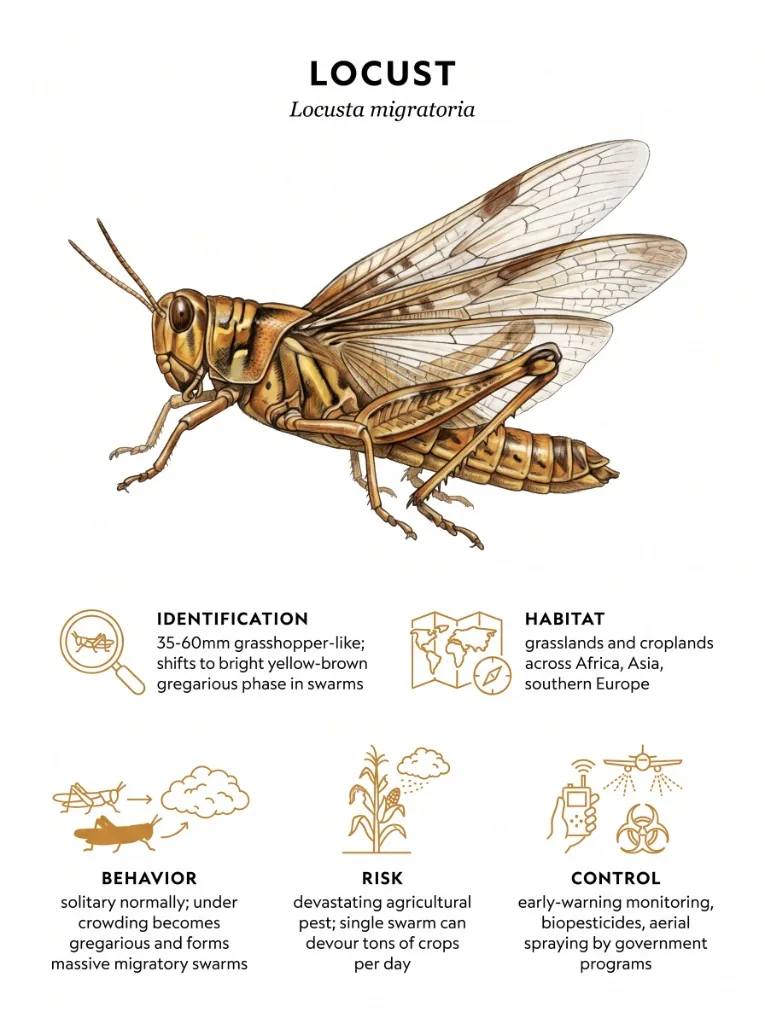
Locust
Locusta migratoria
Size
35–60 mm
Category
Garden & Outdoor
About the locust
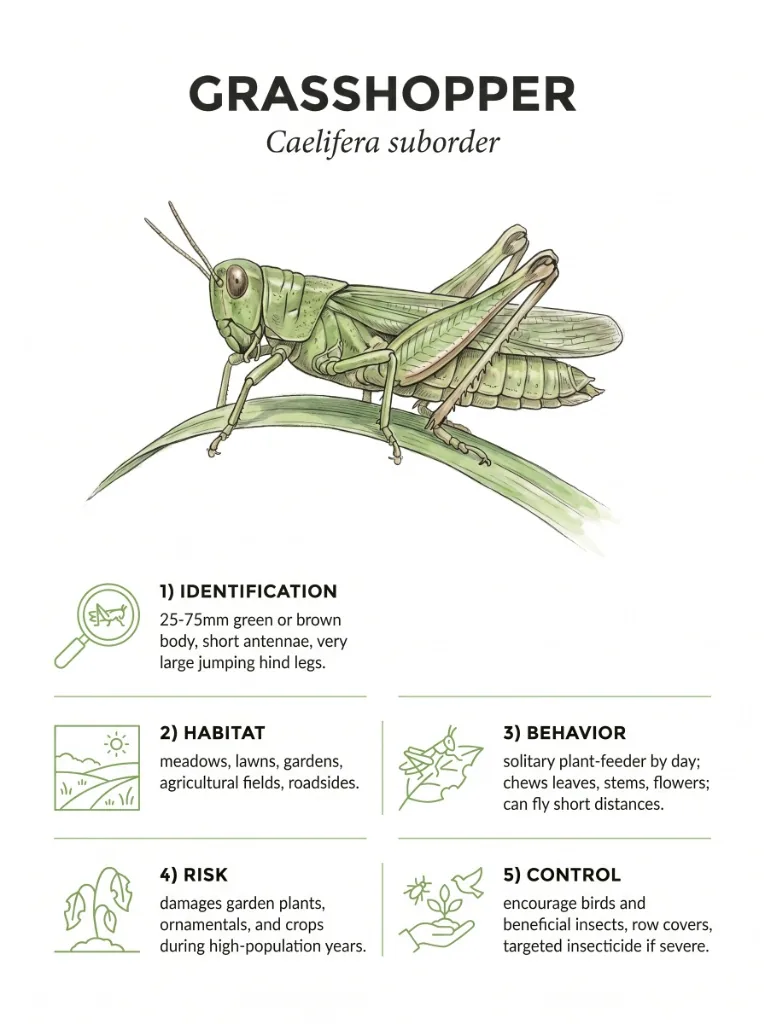
Locusts are grasshoppers that, under crowded conditions, transform into a 'gregarious phase' and form the massive migratory swarms famous from history. They're a devastating agricultural pest globally — a single swarm can devour tons of crops per day — but they're not present in North Carolina. Included here for identification only.
Quick ID
35–60 mm grasshopper-like body that shifts to bright yellow-brown in the gregarious phase.
In the Triangle
Not present in NC. Native to Africa, Asia, and southern Europe.
Think you have locusts?
Free inspection from a licensed Castle Exterminators technician — Durham, Chapel Hill, Raleigh, Cary & the Triangle. We'll confirm the species and recommend a treatment plan.
Request Free Inspection (919) 606-8686