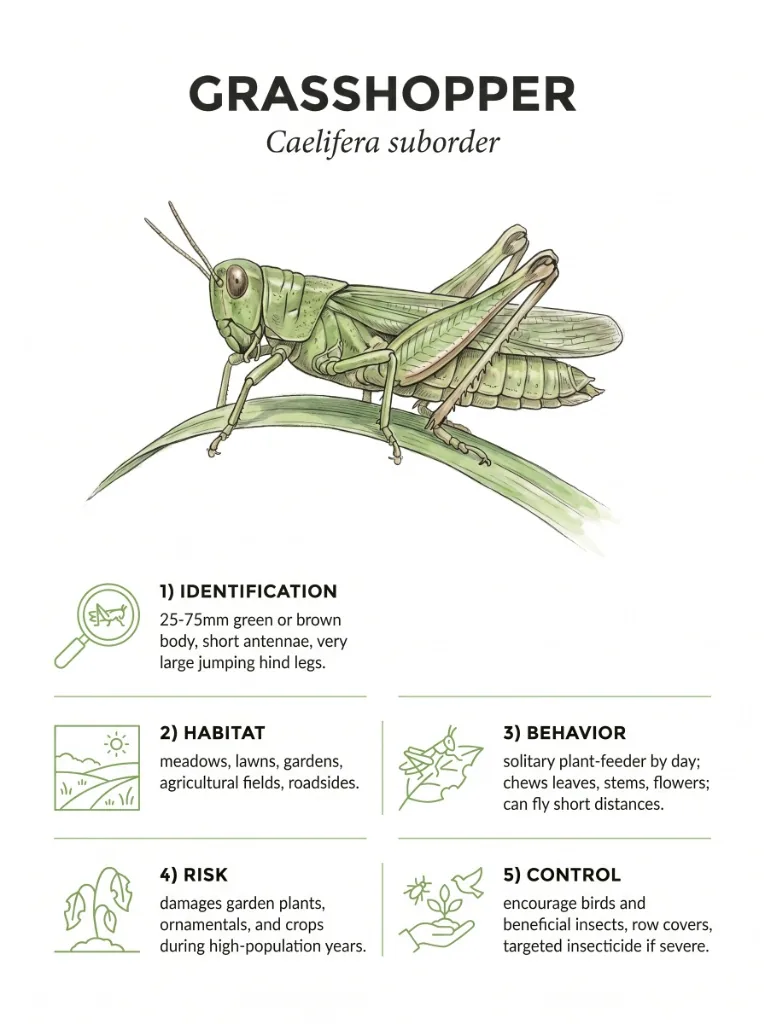
Grasshopper (Caelifera suborder) identification infographic showing size, habitat, behavior, risk, and control
Low concern

Grasshopper — Identification & Control

Caelifera suborder

Size
25–75 mm
Category
Garden & Outdoor

About the grasshopper

Grasshoppers are the familiar large jumping insects most people encounter in meadows, tall grass, and garden edges throughout the warm months. With their powerful hind legs, short antennae, and strong chewing mouthparts, they feed on a wide range of plant material — leaves, stems, and flowers — and while a few grasshoppers in a yard cause no meaningful damage, outbreak years can bring enough of them to noticeably strip garden plants and field crops.

Grasshoppers are not a household or structural pest and pose no risk to people or pets; the concern is purely for gardens, ornamental plantings, and agricultural crops during periods of high population density, usually following a mild winter and dry spring that favors egg survival. They are also frequently confused with locusts, which are technically the same insect family but only earn the "locust" name when they form dense migratory swarms — a phenomenon not seen in North Carolina.

Quick ID

25–75 mm green or brown body, short antennae, very large jumping hind legs.

In the Triangle

Common in Triangle meadows, gardens, and farm edges; rarely a structural concern.

Think you have grasshoppers?

Free inspection from a licensed Castle Exterminators technician — Durham, Chapel Hill, Raleigh, Cary & the Triangle. We'll confirm the species and recommend a treatment plan.

Request Free Inspection (919) 606-8686
When Grasshoppers Become a Garden Problem

Most years, grasshopper numbers in Triangle yards and gardens stay low enough to cause only minor, cosmetic leaf damage. Population spikes tend to follow a mild winter (better egg survival) combined with a dry spring (fewer fungal pathogens that naturally control nymphs), and in those years gardens bordering meadows, fields, or unmown lots can see noticeably heavier feeding pressure on vegetables and ornamentals.

Protecting Garden Plants From Grasshoppers

Row covers over young, vulnerable seedlings physically block feeding grasshoppers during the most damage-prone growth stage. Keeping garden edges mowed and reducing tall grass adjacent to beds removes preferred habitat and egg-laying sites. In outbreak years, targeted insecticide application or botanical repellents on high-value plantings can protect against significant losses, though most home gardens never need more than physical barriers and routine monitoring.

Frequently asked

Grasshopper questions homeowners ask

Are grasshoppers the same as locusts?
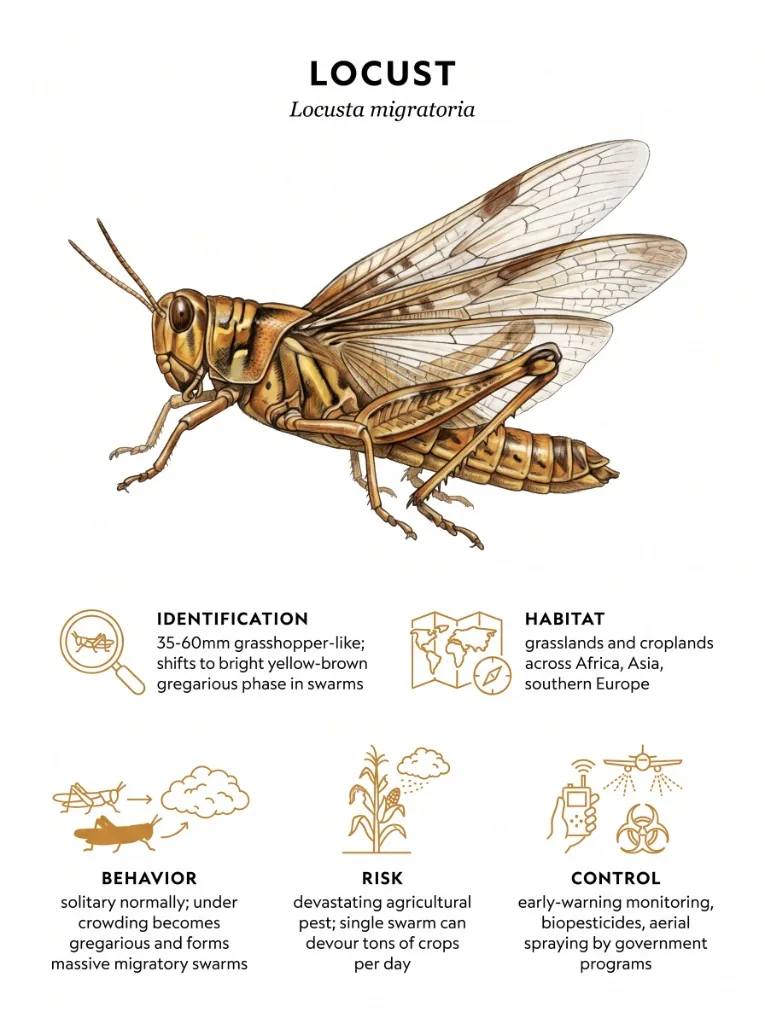
They belong to the same insect group, but 'locust' specifically refers to certain grasshopper species that form dense, destructive migratory swarms under crowded conditions — a phenomenon that does not occur in North Carolina.
Do grasshoppers bite or sting people?
No, grasshoppers pose no bite or sting risk to people or pets. Their chewing mouthparts are built for plant material, and any concern is limited to potential feeding damage on garden and crop plants.

Related pests

More in garden & outdoor

Browse all pests