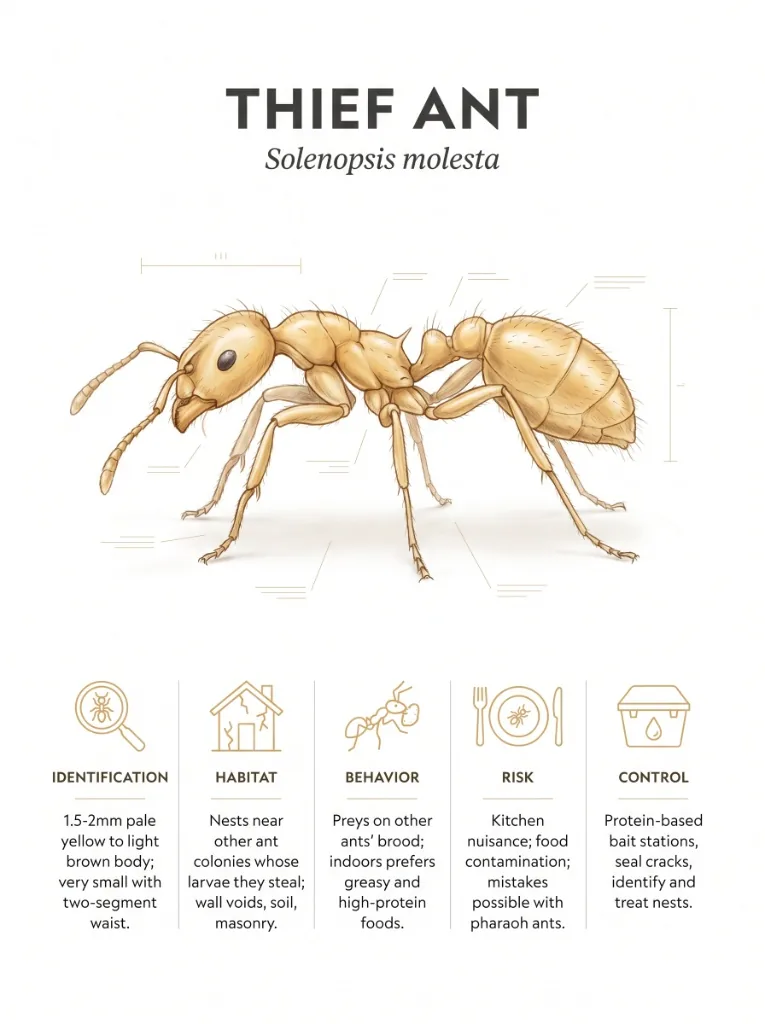
Thief Ant (Solenopsis molesta) identification infographic showing size, habitat, behavior, risk, and control
Low concern

Thief Ant — Identification & Control

Solenopsis molesta

Size
1.5–2 mm
Category
Ants

About the thief ant

Thief ants (Solenopsis molesta) are one of the smallest ants in North Carolina — 1.5-2 mm, pale yellow to yellowish-brown — and they get their name from their habit of nesting near larger ant colonies and stealing food and larvae from them. Because of their tiny size, they are frequently mistaken for pharaoh ants, but they differ in important ways: thief ants have a two-node waist, are slightly darker, and are less aggressive indoor colonizers.

Thief ants are more common in the Triangle than most homeowners realize, and their tiny size lets them enter through screens and gaps other ants can't. Indoor invasion typically follows the same pattern as other small ants — trails to sweet or greasy foods — but their preference for greasy foods over sweets is a distinguishing behavioral clue.

Quick ID

1.5–2 mm pale yellow to light brown body; very small with two-segment waist.

In the Triangle

Less common than odorous house ants but show up in older Triangle homes with mixed ant pressure.

Think you have thief ants?

Free inspection from a licensed Castle Exterminators technician — Durham, Chapel Hill, Raleigh, Cary & the Triangle. We'll confirm the species and recommend a treatment plan.

Request Free Inspection (919) 606-8686
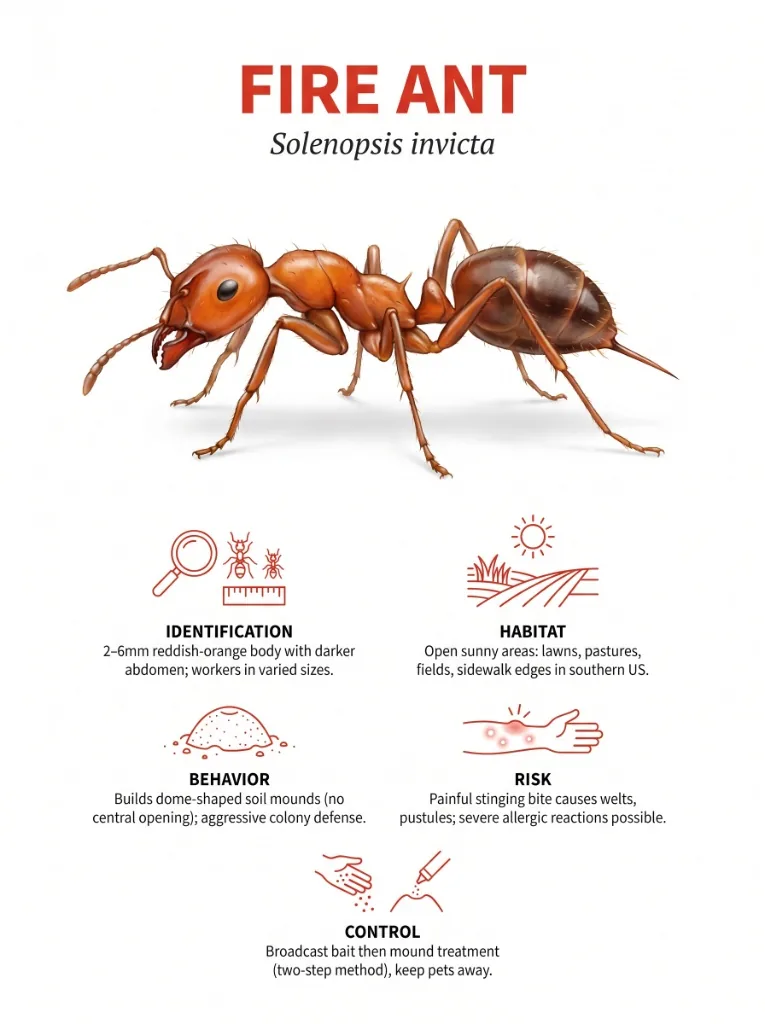
Identifying Thief Ants

  • Size — 1.5-2 mm; one of the smallest indoor ants in NC.
  • Color — pale yellow to yellowish-brown, sometimes slightly amber.
  • Body — two-node waist and 10-segmented antennae with a distinct 2-segmented club at the tip (visible under magnification).
  • Food preference — greasy foods more than sweets. Trails often to meat scraps, pet food, cheese, and greasy residue rather than sugar drips.
  • Nest behavior — often nests very close to (or within) larger ant colonies to steal food and brood.

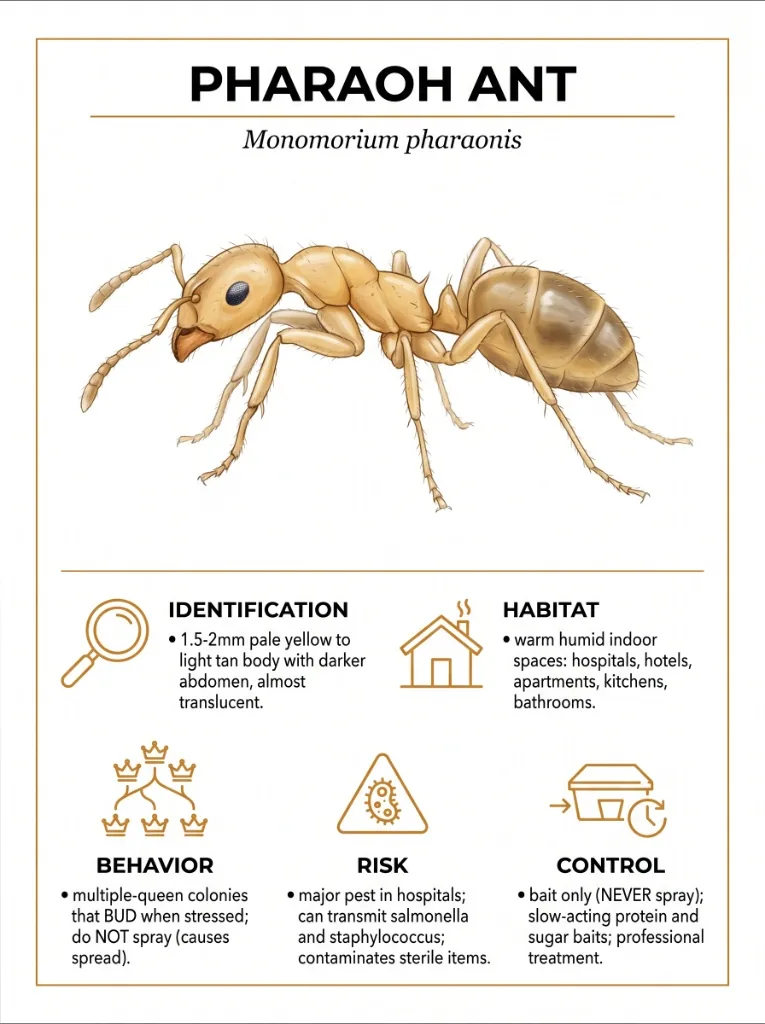
Thief Ant vs. Pharaoh Ant

These two small pale ants are the most commonly confused pair in NC:

  • Thief ant — 10-segmented antennae with a 2-segmented club. Yellowish-brown, slightly darker. Prefers greasy foods. Two-node waist.
  • Pharaoh ant — 12-segmented antennae with a 3-segmented club. Pale yellow. Prefers both sweets and proteins depending on colony phase. Two-node waist.

Correct ID matters because pharaoh ant treatment (bait-only, extended timeline) is much more intensive than thief ant treatment. A licensed inspector can identify with confidence given a specimen or a clear photo.

Our Treatment Approach

  • Protein-based and grease-based baits — the food preference lets us select more attractive baits than the sugar-based baits most retail products offer.
  • Non-repellent perimeter and interior applications.
  • Trail-follow inspection to identify entry points — thief ants often enter through gaps other ants would find too small.
  • Sanitation guidance targeting greasy residue rather than the sweet-crumb focus most homeowners default to.

Every plan is scoped with a personalized quote.

Prevention Tips

  • Wipe stovetops, range hoods, and backsplashes weekly — grease films attract thief ants more than sugar residue does.
  • Store pet food in sealed hard containers.
  • Take out kitchen garbage frequently; rinse containers with meat or dairy residue before discarding.
  • Do not spray a visible trail with grocery-store insecticide.
  • Repair window screens with fine mesh — thief ants exploit gaps other ants cannot.

Frequently asked

Thief Ant questions homeowners ask

Are these tiny yellow ants pharaoh ants or thief ants?
The two look very similar. The key differences: thief ants have 10-segmented antennae with a 2-segmented club and prefer greasy food; pharaoh ants have 12-segmented antennae with a 3-segmented club and shift between sugars and proteins. A licensed technician can identify from a specimen or a clear photo — correct ID matters because treatment approaches differ.
Are thief ants dangerous?
Not medically. They do not sting meaningfully and are not disease vectors of significance. The concerns are contamination of food surfaces and the nuisance factor.
Why do they prefer greasy foods when other ants like sugar?
Thief ant colonies apparently need higher protein and fat intake to support brood production compared to strictly-sweet-preferring species. Their opportunistic thief behavior — stealing brood from larger colonies — may also drive higher protein needs. Whatever the reason, protein/grease baits catch them more reliably than sugar baits.
Will they nest inside my house?
They can — usually in wall voids, insulation, or spaces adjacent to larger ant colonies they are stealing from. Indoor nesting is less common than for pharaoh ants, but not rare.
Do I need professional treatment?
For a small transient trail, careful cleaning and sealing may resolve it. For persistent trails, multiple entry points, or any confusion about whether they might be pharaoh ants (which are much harder to control), professional inspection is worth the free visit.

Related pests

More in ants

Browse all pests